- A single 90-minute hyperbaric oxygen session before autologous stem cell transplant was linked to faster neutrophil engraftment, 10 days versus 11 days in controls.
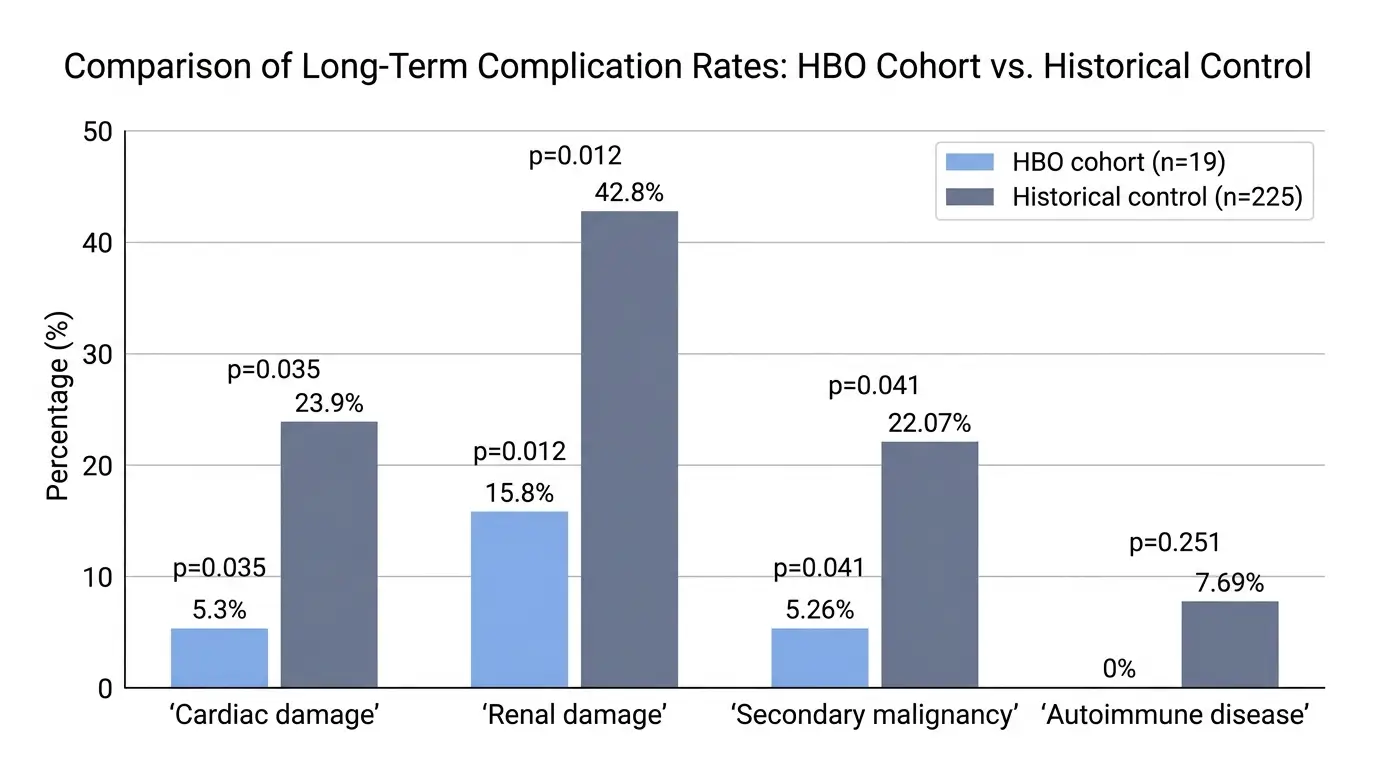
- Cardiac damage occurred in 5.3 percent of treated patients versus 23.9 percent of historical controls after a median 11.4-year follow-up.
- Renal damage dropped to 15.8 percent in the hyperbaric oxygen group versus 42.8 percent in controls.
- Secondary malignancy, excluding non-melanoma skin cancers, fell to 5.26 percent versus 22.07 percent, though the result did not reach statistical significance.
- The study reviewed 19 treated patients against 225 historical controls at a single center, limiting how broadly the findings apply.
KANSAS CITY, Kan., May 19, 2026. A single dose of hyperbaric oxygen given before an autologous stem cell transplant was associated with significantly lower rates of long-term cardiac and renal damage in blood cancer patients, according to a 14-year follow-up study published Jan. 30 in Frontiers in Hematology.
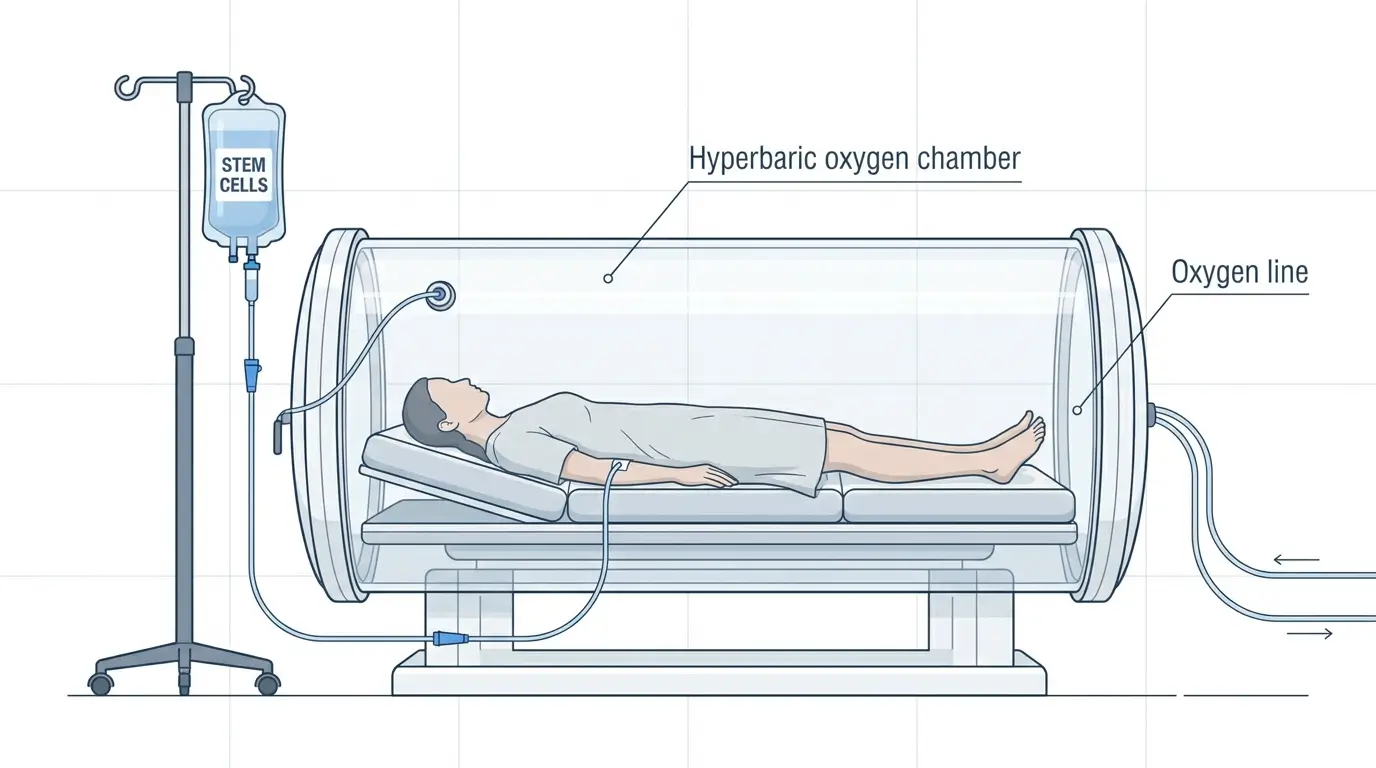
The retrospective analysis from the University of Kansas Cancer Center compared 19 patients who received a 90-minute hyperbaric oxygen session at 2.5 atmospheres absolute six hours before stem cell infusion with 225 historical controls treated between 2008 and 2012.
Cardiac complications occurred in 5.3 percent of treated patients versus 23.9 percent of controls (p = 0.046), and renal damage in 15.8 percent versus 42.8 percent (p = 0.016), the authors reported.
The original Phase I pilot trial ran at the University of Kansas Cancer Center from March to December 2014. Patients aged 18 to 70 with non-Hodgkin lymphoma, Hodgkin disease, or multiple myeloma were eligible if they met standard transplant criteria, the authors wrote.
Hyperbaric oxygen was delivered in a monoplace chamber, with patients breathing 100 percent oxygen at 2.5 atmospheres absolute for 90 minutes. One patient stopped treatment after 14 minutes because of ear discomfort and was excluded from the analysis.
The historical control cohort was matched by age category, sex, disease type, and conditioning chemotherapy regimen.
Median patient age was 63 years in the treated group and 61 years in the control group. The most common conditioning regimen in both arms was high-dose melphalan.
Patients who received hyperbaric oxygen reached neutrophil engraftment in a median of 10 days, compared with 11 days in controls (p = 0.003), according to the paper.
Median platelet recovery occurred at 16 days versus 18 days (p < 0.0001). Mucositis affected 26.3 percent of treated patients versus 64.2 percent of controls (p = 0.002). Rates of neutropenic fever and transfusion burden did not differ significantly between the two groups.
After a median follow-up of 11.4 years, median overall survival had not been reached in the hyperbaric oxygen group and was 9 years in the historical cohort (p = 0.59), the authors reported.
Median relapse-free survival was 4.2 years versus 3.7 years (p = 0.34). At last follow-up, 52.6 percent of treated patients were alive compared with 40 percent of controls. Among patients with multiple myeloma, 66.6 percent in the hyperbaric oxygen arm were alive versus 30.4 percent in the control arm.
Non-relapse mortality was lower in the treated group, with a p-value of 0.057, falling just short of statistical significance. Excluding non-melanoma skin cancers, secondary malignancy occurred in 5.26 percent of treated patients versus 22.07 percent of controls (p = 0.074). Autoimmune disease developed in none of the 19 treated patients versus 7.69 percent of controls (p = 0.14).
The Kansas group has previously reported that transient hyperoxia downregulates erythropoietin receptor expression on CD34+ stem cells, which the authors say may improve stem cell homing and engraftment.
They cited a separate multicenter Phase II randomized trial in multiple myeloma patients showing accelerated lymphocyte and natural killer cell recovery after hyperbaric oxygen pretreatment, as referenced in the discussion section of the paper.
Autologous stem cell transplant is used in approximately 12,000 U.S. patients each year for hematologic malignancies, at an estimated cost of US$200,000 per case, the authors wrote, citing prior literature.
The authors flagged several limitations. The study was single-center, non-randomized, and compared a small treated cohort with a historical control group.
“The study was intended as a hypothesis-generating analysis rather than to establish definitive causality,” the authors wrote in the discussion.
Prospective multicenter trials powered to detect reductions in non-relapse mortality and major organ toxicity are needed before the protocol can be recommended outside a research setting, the authors said. Additional studies in the allogeneic transplant setting are planned to evaluate effects on graft-versus-host and graft-versus-leukemia outcomes.
References
- Lominska V, Oxenberg M, Aboona A, Sasakura L, Aboona S, Sears A, Allin D, Abdelhakim B, McGuirk J, Abhyankar O, Abhyankar H. Long-term outcomes of hyperbaric oxygen therapy before autologous hematopoietic stem cell transplantation. Frontiers in Hematology, Sec. Blood Cancer, Vol. 5, 30 January 2026. https://www.frontiersin.org/journals/hematology/articles/10.3389/frhem.2026.1733667/full