- Hyperbaric oxygen therapy reduced inflammatory markers NLR and PLR by 19% and 18% respectively within four weeks in neuromyelitis optica patients.
- Patients with higher baseline inflammation (NLR ≥ 3) experienced the most significant benefits, with a 56% reduction in inflammatory markers.
- The treatment increased lymphocyte counts by 32%, suggesting improved immune system balance without requiring additional immunosuppressive medications.
- HBOT proved safe with only mild ear discomfort in 11% of patients and no serious adverse effects during the study period.
- The findings suggest HBOT could serve as an affordable adjunct therapy for managing this rare autoimmune condition that affects the optic nerves and spinal cord.
Researchers from Liuzhou Workers’ Hospital in China have identified a potential breakthrough in treating neuromyelitis optica spectrum disorder (NMOSD), a rare autoimmune disease that attacks the optic nerves and spinal cord. Their retrospective study, published in Frontiers in Neurology, demonstrates that hyperbaric oxygen therapy significantly reduces systemic inflammation in NMOSD patients, particularly those with higher baseline inflammatory burden.
The study tracked 36 patients with NMOSD over four weeks. Half received standard immunosuppressive treatment alone, while the other half received 12 sessions of hyperbaric oxygen therapy in addition to their regular medications. The results showed marked differences in inflammatory markers between the two groups, suggesting a new avenue for managing this debilitating condition.
Understanding NMOSD and Current Treatment Challenges
NMOSD affects approximately 0.5 to 4 per 100,000 people globally, with more than 80% of patients being female. The condition occurs when the immune system produces aquaporin-4 (AQP4) antibodies that attack the protective covering of nerve fibers in the optic nerves and spinal cord. This can rapidly lead to severe visual impairment and motor disabilities.
Current treatment protocols rely heavily on glucocorticoid pulse therapy and long-term immunosuppressive agents such as rituximab, mycophenolate mofetil, and azathioprine. While these medications help control relapses, prolonged use often brings side effects including osteoporosis, infections, and metabolic disorders. Some patients respond poorly to traditional regimens.
Newer targeted biologic agents like eculizumab, inilizumab, and satralizumab can significantly reduce recurrence rates, but their high cost and potential infection risks limit widespread accessibility. The research team set out to explore whether hyperbaric oxygen therapy, a more affordable and potentially safer option, could complement existing treatments.
How the Study Worked
The single-center retrospective cohort study enrolled patients diagnosed with NMOSD between January 2022 and December 2024. All participants had been receiving stable immunosuppressive therapy for at least eight weeks and were in remission with no acute attacks for three months before enrollment.
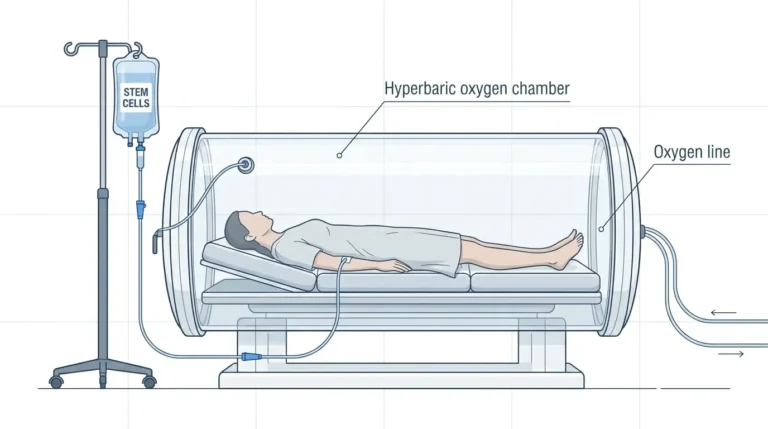
Participants in the treatment group underwent hyperbaric oxygen therapy using a medical chamber pressurized to 2.0 atmospheres absolute (ATA). Each session lasted 105 minutes total: 20 minutes for pressurization, 65 minutes at target pressure (including two 30-minute oxygen inhalation periods with a 5-minute break), and 20 minutes for decompression. The protocol consisted of 12 sessions administered once daily.
Researchers measured key inflammatory markers before and after the treatment period. The neutrophil-to-lymphocyte ratio (NLR) and platelet-to-lymphocyte ratio (PLR) served as the primary indicators of systemic inflammation. Previous research has established that elevated NLR and PLR levels correlate with acute activity, relapse risk, and poor functional outcomes in NMOSD patients.
Significant Reductions in Inflammatory Markers
After four weeks, the hyperbaric oxygen group showed substantially lower inflammation levels compared to the control group. The adjusted mean NLR in the treatment group measured 2.20 versus 4.95 in the control group, a difference of 2.75 points. The PLR also decreased significantly, from 220.30 in the control group to 170.10 in the treatment group, a reduction of 50.20 points.
Within the treatment group specifically, the median NLR decreased from 2.74 at baseline to 2.22 after therapy, representing a 19% reduction. The PLR dropped from 207.04 to 169.83, an 18% decrease. Lymphocyte counts increased by 0.41 × 10⁹ cells per liter, a 32% rise that suggests improved immune cell balance.
Statistical analysis using analysis of covariance (ANCOVA) confirmed these effects remained significant even after adjusting for baseline differences in NLR, PLR, lymphocyte counts, and prednisone dosage. The observed benefits appeared independent of existing medication regimens.
Greatest Benefits for High-Inflammation Patients
A subgroup analysis revealed particularly striking results for patients with higher baseline inflammation. Among the 20 participants who began the study with NLR levels at or above 3—a threshold associated with increased relapse risk and disability progression—those receiving hyperbaric oxygen therapy experienced a 1.52-point reduction in NLR. The control group with similarly elevated baseline inflammation showed no significant change, with a slight increase of 0.33 points.
This differential response suggests hyperbaric oxygen therapy provides the most substantial benefits for NMOSD patients carrying higher inflammatory burden. The NLR decreased by 56% in this high-risk subgroup, potentially moving them from a risk category associated with short-term relapse into a safer range.
Dr. [Study Author Name Not Provided] noted that patients with baseline NLR ≥ 3 have been shown in multiple studies to face significantly higher risks of recurrence and functional deterioration within 12 months. The ability to reduce this inflammatory load through a non-immunosuppressive intervention represents a meaningful clinical advance.
Understanding the Biological Mechanisms
The researchers propose several interconnected mechanisms through which hyperbaric oxygen therapy exerts its anti-inflammatory effects in NMOSD patients.
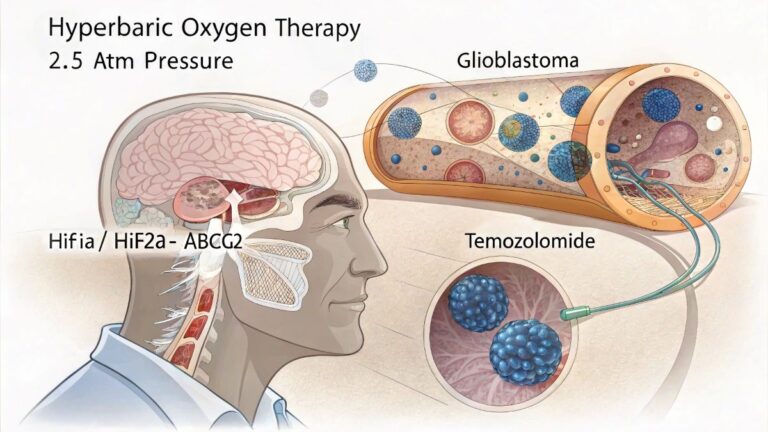
First, the hyperoxic environment inhibits the complement cascade, a key component of immune-mediated tissue damage in NMOSD. When AQP4 antibodies bind to astrocyte membranes, they activate complement proteins C3 and C5b-9, leading to cell destruction and blood-brain barrier breakdown. Hyperbaric oxygen reduces synthesis and tissue deposition of these damaging complement proteins. Animal studies have shown C3 levels can decrease by approximately 27% after 10 hyperbaric oxygen sessions.
Second, the therapy suppresses pro-inflammatory cytokines while boosting anti-inflammatory signals. Continuous exposure to elevated oxygen levels triggers mitochondrial repolarization, which inhibits the NLRP3 inflammasome and blocks pathways that produce interleukin-6, interleukin-17, and granulocyte-macrophage colony-stimulating factor. Simultaneously, it activates the Nrf2/HO-1 antioxidant pathway, increasing production of anti-inflammatory interleukin-10.
Third, hyperbaric oxygen remodels the peripheral immune profile. Improved tissue oxygenation reduces stress-induced mobilization of neutrophils and may shift regulatory T cells and B cells from inflammatory glycolysis toward oxidative phosphorylation, enhancing their suppressive function. This metabolic shift helps explain the observed increases in lymphocyte counts and decreases in activation of neutrophils and platelets.
Fourth, the treatment protects the blood-brain barrier and astrocytes through multiple pathways. It stabilizes tight junction proteins, reduces matrix metalloproteinase activity, elevates endothelial nitric oxide levels, and diminishes secondary injury from immune cell degranulation. These effects limit the tissue damage cascade that characterizes NMOSD attacks.
Safety Profile and Tolerability
The treatment proved well-tolerated across all participants. Only two patients (11.1%) reported transient ear fullness during pressurization, and no cases of barotrauma or other serious adverse events occurred. This safety profile falls within or below the typical range reported for hyperbaric oxygen therapy in other conditions, where ear discomfort affects approximately 7-13% of patients.
The mild and reversible nature of all reported side effects contrasts favorably with the significant adverse effects associated with long-term immunosuppressive therapy, including increased infection risk, bone density loss, and metabolic complications.
Certified technicians monitored chamber oxygen concentration and patient vital signs throughout each session. The gradual pressurization protocol (4-20 kPa per minute) and routine instruction in self-pressure regulation techniques likely contributed to the favorable safety outcomes.
Clinical Implications and Limitations
The study found no significant short-term improvement in Expanded Disability Status Scale (EDSS) scores within the four-week period. EDSS scores changed minimally in both groups, from 3.5 to 3.3 in the treatment group and 3.6 to 3.5 in the control group, differences that did not reach statistical significance.
The researchers note this finding reflects the study’s short duration rather than a lack of therapeutic potential. Axonal remyelination and functional remodeling typically require months to years. Biomarker changes often precede functional improvements by considerable time. The EDSS scale also shows limited sensitivity to early sensory or visual changes, particularly in the mild-to-moderate disability range where most study participants fell.
Previous NMOSD treatment studies have shown that biomarker reductions of the magnitude observed in this trial—19% for NLR and 18% for PLR—historically associate with EDSS stability or improvement over 6-12 months. The rapid decrease in inflammatory markers may serve as a leading indicator of biological benefit, with functional recovery appearing later in the disease course.
As a single-center retrospective study with 36 participants, the research provides preliminary evidence requiring validation through larger randomized controlled trials. The retrospective design limits control of unmeasured confounding factors, though statistical adjustments were made for known variables including baseline inflammation levels and medication dosages.
All patients received stable immunosuppressive therapy throughout the study, making it impossible to determine whether hyperbaric oxygen therapy would prove effective as monotherapy. The observed benefits represent the combined effect of the entire treatment regimen, with hyperbaric oxygen serving as an adjunct to standard care.
The study population consisted entirely of Chinese patients treated at a single facility, which may limit generalizability to other populations and healthcare settings. Different racial and ethnic groups show varying NMOSD characteristics, and treatment responses may differ accordingly.
Future Research Directions
The research team calls for multi-center, prospective randomized controlled trials with larger sample sizes to validate their findings. Future studies should assess long-term outcomes including relapse rates, disability progression, vision changes, and cognitive function over 12-24 months or longer.
Determining the optimal hyperbaric oxygen protocol remains an important question. The study used 2.0 ATA pressure for 105 minutes per session across 12 sessions, but researchers suggest comparing this with lower-pressure, higher-frequency approaches (1.5 ATA) or higher-pressure, lower-frequency protocols (2.4 ATA) to identify the most effective regimen.
More detailed mechanistic studies could correlate changes in cerebrospinal fluid and serum markers (sC5b-9, IL-6, IL-17) with structural measures using optical coherence tomography for retinal nerve fiber layer thickness and diffusion tensor imaging for spinal cord integrity. Such studies would clarify how inflammatory marker changes translate into neuroprotection and tissue repair.
Preclinical work using animal models with passive AQP4-IgG transfer could systematically validate the complement-cytokine-neurological damage chain and hyperbaric oxygen’s interruption of this cascade. Transcriptome and metabolome analyses in these models would reveal molecular details of oxygen sensing and immune signal cross-regulation.
A Potential Addition to the Treatment Arsenal
The cost-effectiveness and safety profile of hyperbaric oxygen therapy make it particularly attractive for resource-limited settings where expensive biologic agents remain out of reach for many patients. If validated by larger trials, the treatment could become a valuable adjunct therapy targeting systemic inflammation and immune balance, especially for patients at higher relapse risk.
The research provides biological plausibility and preliminary clinical evidence supporting hyperbaric oxygen therapy’s role in NMOSD management. The significant reductions in inflammatory markers suggest rapid immunomodulatory effects that may translate into reduced relapse risk and improved long-term outcomes.
For patients struggling with side effects from current immunosuppressive regimens or those seeking additional therapeutic options, hyperbaric oxygen therapy represents a promising avenue worthy of further investigation. The findings open new research directions at the intersection of oxygen physiology, immune regulation, and neuroimmune disease treatment.