- Hyperbaric oxygen therapy significantly increased the number of oocytes retrieved in patients with poor ovarian response.
- The quality of embryos also showed improvement following the therapy.
- A specific range of four to seven sessions of hyperbaric oxygen therapy was identified as most effective.
- The study involved 41 women between the ages of 20 and 45.
- No further benefit was observed beyond eight sessions of the treatment.
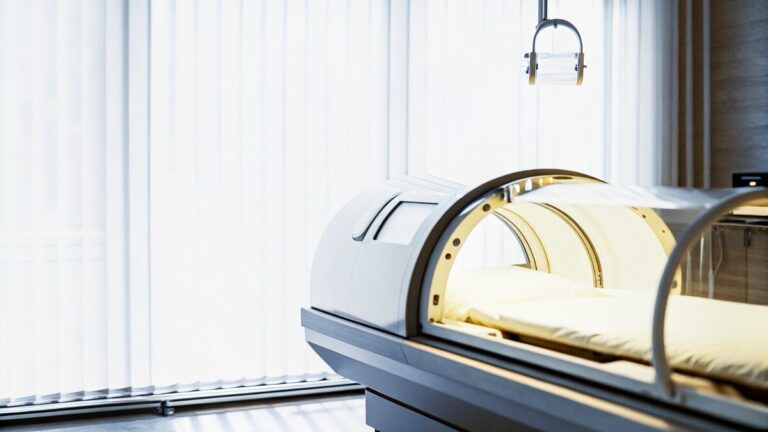
A pre-post cohort study has indicated that Hyperbaric Oxygen Therapy (HBOT) can improve the number of retrieved oocytes and the quality of embryos in patients classified as poor ovarian responders.
The research, titled “Hyperbaric oxygen therapy improves oocyte yield and embryo quality in poor ovarian responders: a pre-post cohort study,” evaluated the effects of HBOT on women who have a reduced response to ovarian stimulation.
The findings suggest that a specific number of HBOT sessions could be beneficial for this group of patients.
Study Details and Findings
The study included 41 women, aged between 20 and 45, who were diagnosed with Poor Ovarian Response (POR).
This diagnosis was based on the Bologna criteria.
The research was structured as a pre-post cohort study, where the outcomes of ovarian stimulation and embryological results were compared before and after the administration of HBOT.
The results showed a notable increase in the number of oocytes retrieved after the therapy. The number of pre-ovulatory follicles went up from an average of 2.07 to 3.00, and the retrieved oocytes increased from 2.27 to 3.63.
Additionally, the study reported significant increases in the follicle output rate (FORT) and the follicle-to-oocyte index (FOI).
Optimal Treatment Regimen
A key finding from the research was the identification of an optimal number of HBOT sessions. The study found a nonlinear relationship between the number of sessions and the oocyte count.
The number of oocytes increased significantly after two sessions and reached a plateau between four and seven sessions.
The researchers observed no additional increase in oocyte numbers with more than eight sessions.
Based on these findings, the study concludes, “Combining the controlled ovarian stimulation process with 4–7 sessions of HBOT could improve oocyte number and embryo quality in POR patients.”
Implications of the Research
Poor ovarian response presents a challenge in assisted reproduction, often leading to low oocyte yields and poor embryo quality.
This study suggests that HBOT could be a useful complementary therapy for these patients. By improving both the quantity of oocytes and the quality of embryos, this therapy may offer a new approach for individuals undergoing fertility treatments.
The research was conducted by a team from the Medical Center for Human Reproduction and the Department of Hyperbaric Oxygen at Beijing Chao-Yang Hospital, Capital Medical University.
Source
Li, Y., Wang, Y., Li, L. et al. (2025). Hyperbaric oxygen therapy improves oocyte yield and embryo quality in poor ovarian responders: a pre-post cohort study. Reproductive Biology and Endocrinology, 23(1). https://doi.org/10.1186/s12958-025-01475-z