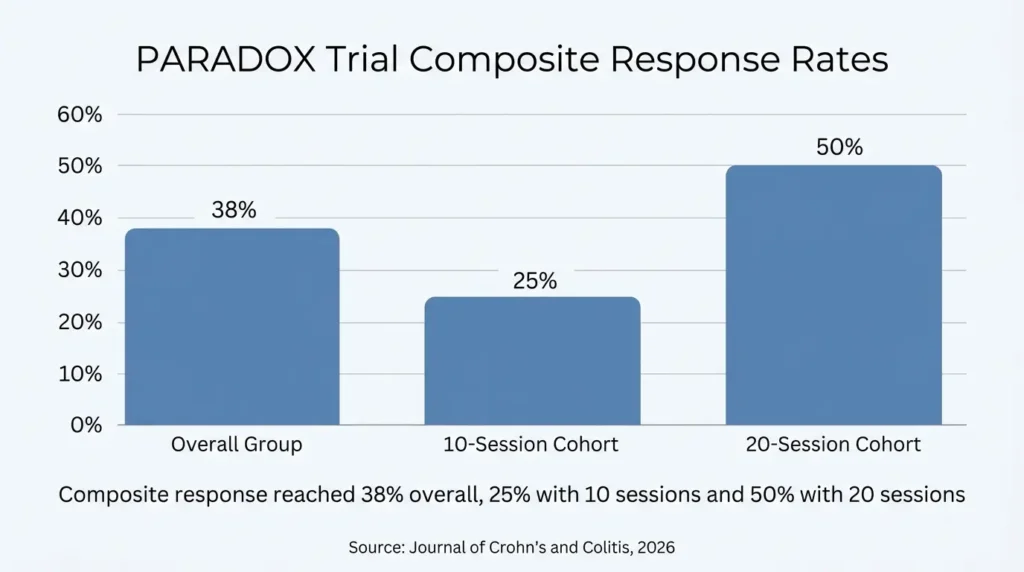
- A 16-patient pilot trial at Amsterdam UMC found hyperbaric oxygen therapy produced a composite clinical and endoscopic response in six patients, or 38%, at week 12.
- Patients who received 20 hyperbaric oxygen sessions responded at a rate of 50%, compared with 25% among patients who received 10 sessions.
- Contrast-enhanced ultrasound showed bowel perfusion rose in treatment responders and fell in non-responders by week 12, a divergence the researchers called statistically significant.
- No serious adverse events or treatment discontinuations occurred among the 16 participants tracked through week 26.
- The study, published in the Journal of Crohn’s and Colitis on May 14, 2026, calls for a larger randomized trial before hyperbaric oxygen therapy becomes a standard option for treatment-resistant ulcerative colitis.
A pilot trial at Amsterdam UMC found that hyperbaric oxygen therapy produced meaningful clinical and endoscopic improvement in patients with ulcerative colitis who had already failed multiple biologic treatments, according to results published in the Journal of Crohn’s and Colitis on May 14, 2026.
The composite response rate reached 38% among all 16 participants and 50% among those given 20 daily sessions, the highest dose tested, the researchers reported. The finding matters because refractory ulcerative colitis often leaves patients facing surgical removal of the colon once biologics and other advanced drugs stop working. Hyperbaric oxygen, delivered inside a pressurized chamber, gave researchers a new mechanism to test: restoring blood flow to inflamed bowel tissue.
What the trial tested
Researchers at Amsterdam UMC, a tertiary referral center for inflammatory bowel disease in the Netherlands, designed the trial, named PARADOX, to test hyperbaric oxygen therapy in patients with ulcerative colitis who had stopped responding to standard drug treatment. Ulcerative colitis is a chronic inflammatory bowel disease that causes urgency, bloody diarrhea, abdominal pain and fatigue.
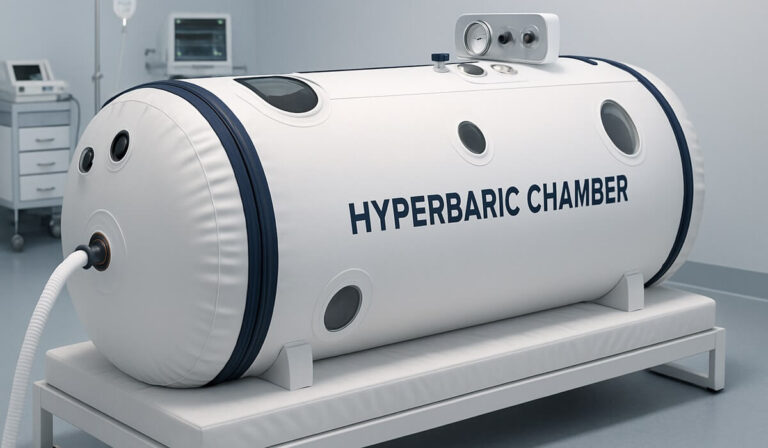
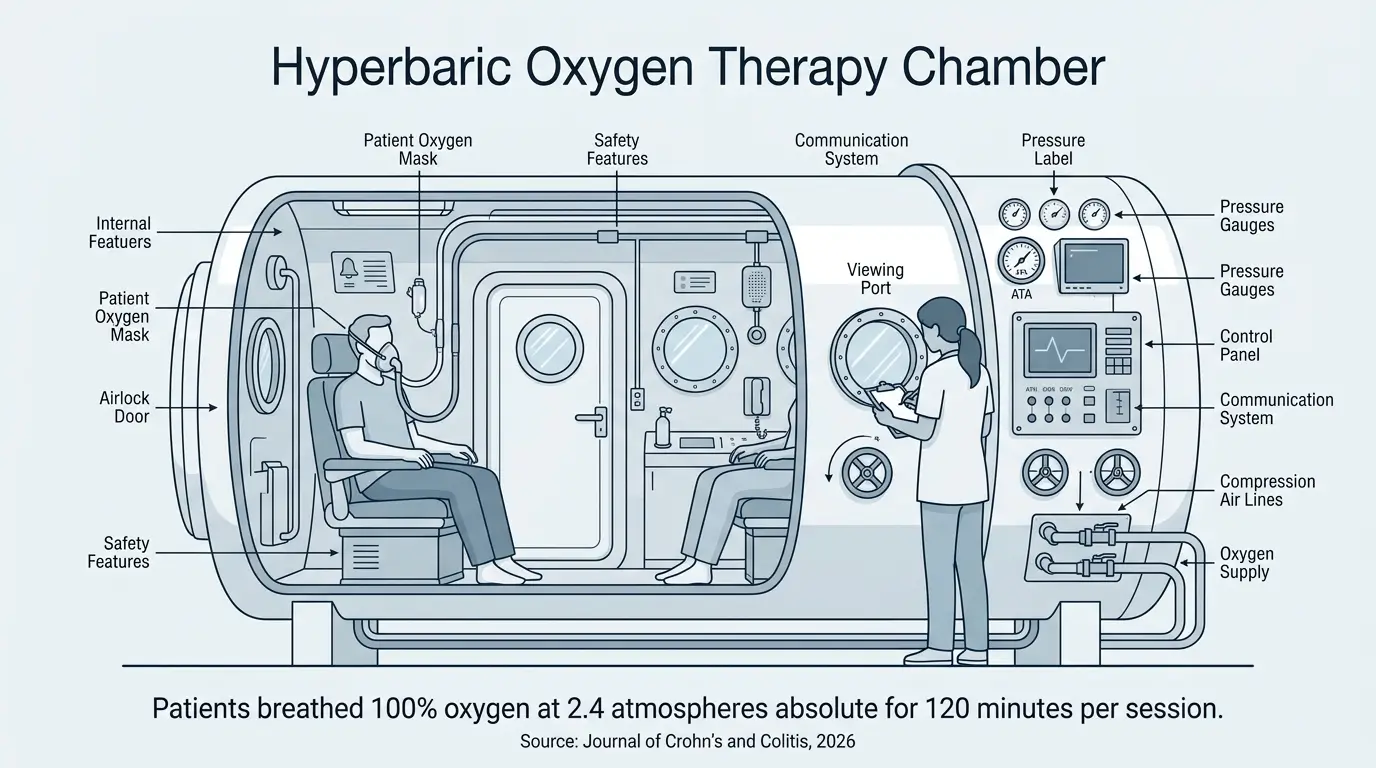
Hyperbaric oxygen therapy, known as HBOT, delivers 100% oxygen inside a pressurized chamber to raise oxygen levels in body tissue and stimulate new blood vessel growth. Lieven Mulders of Amsterdam UMC’s Department of Gastroenterology and Hepatology led the study.
The trial enrolled patients age 16 and older who had a total Mayo score above five and a Mayo endoscopic subscore, a measure of visible bowel inflammation on colonoscopy, of two or higher.
Every participant had already failed at least two classes of advanced UC therapy, including biologic drugs or small molecule drugs. Between January 2023 and December 2024, researchers screened 17 patients and enrolled 16 of them, according to the study.
Patients were split into two active dosing cohorts of eight patients each. One cohort received 10 daily hyperbaric oxygen sessions over two weeks, and the other received 20 daily sessions over four weeks. Each session lasted 120 minutes at a pressure of 2.4 atmospheres absolute, with two five-minute air breaks built in to limit the risk of oxygen toxicity to the nervous system. A planned third cohort of 30 sessions was dropped after the 20-session group hit a preset response threshold of at least 50%, according to the study.
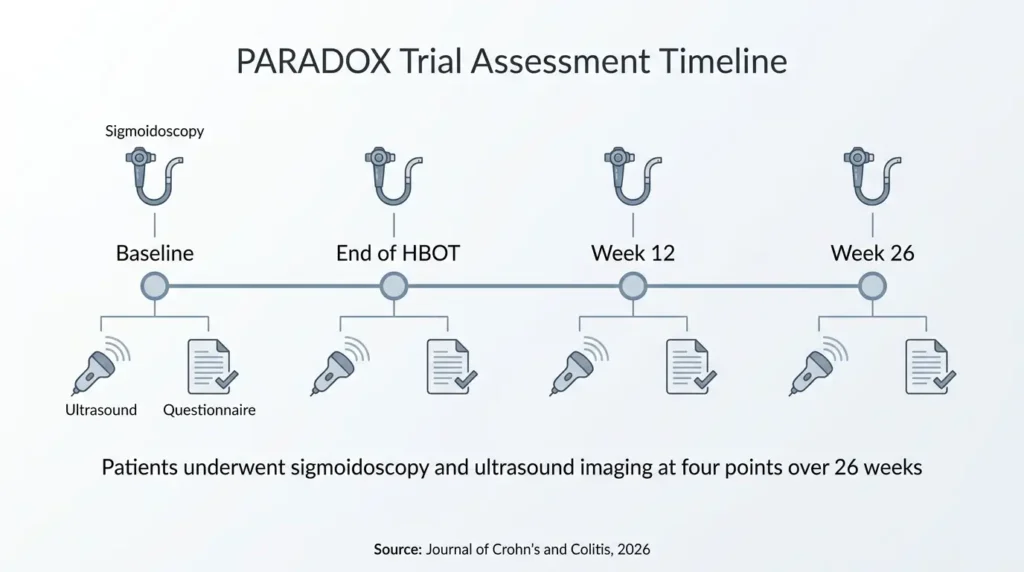
The trial’s main measure, called the composite clinical and endoscopic response, required patients to hit three targets at week 12: a Mayo score drop of at least three points and 30% from baseline, a rectal bleeding subscore of zero, and at least a one-point drop in the endoscopic subscore.
Researchers also tracked bowel healing with intestinal ultrasound and contrast-enhanced ultrasound, imaging methods that measure the thickness of the bowel wall and the blood flow through it.
How patients responded to treatment
Six of the 16 patients, or 38%, met the composite response target at week 12, the researchers reported. The response rate was 25% in the 10-session cohort and 50% in the 20-session cohort. Three patients dropped out before week 12 because they saw no clinical improvement; two switched to a different medication and one had surgery to remove the colon, according to the study.
Secondary measures also improved. Clinical remission, a state in which UC symptoms have largely resolved, occurred in three of the 16 patients, or 19%. Clinical response, a lower bar than remission, occurred in nine patients, or 56%. Endoscopic improvement was seen in three patients, or 19%, and the average total Mayo score fell by 4.3 points from baseline, the study found.
Tissue-level healing followed a similar pattern. Histologic remission, meaning inflammation had largely cleared from biopsy samples, occurred in three patients, or 19%, while histologic improvement occurred in six patients, or 38%. Fecal calprotectin, a stool marker of gut inflammation, normalized in seven of 15 tested patients, or 47%, by week 12 and in nine of 15, or 60%, by week 26, according to the study.
Patients also reported feeling better. Symptomatic remission on patient-reported outcome scores occurred in seven patients, or 44%, at week 12, and quality-of-life scores on the Inflammatory Bowel Disease Questionnaire rose by an average of 18.6 points by the end of treatment. That improvement held at week 12 before partially fading by week 26, the researchers reported.
What the ultrasound imaging revealed
The imaging data pointed to a specific biological mechanism behind the drug’s effect. Using contrast-enhanced ultrasound, a technique that tracks an injected contrast agent moving through blood vessels in real time, researchers measured a metric called peak enhancement, which reflects how much blood flows through the bowel wall.
In patients who responded to treatment, peak enhancement rose from a baseline average of 26.0 decibels to 40.3 decibels by week 12. In patients who did not respond, the same measure fell from 33.3 decibels to 25.5 decibels over the same period, a divergence the researchers called statistically significant (P<.03).
Bowel wall thickness followed a parallel split. A thicker bowel wall usually signals active inflammation in UC, so a drop in thickness is normally read as a sign that a drug is working. In this trial, however, responders kept a thicker bowel wall through week 12 while non-responders showed thinning, a pattern the study authors linked to new blood vessel formation and tissue repair rather than ongoing disease activity.
“HBOT is a well-tolerated adjunctive treatment showing preliminary clinical and endoscopic benefit in refractory UC patients,” the study authors wrote in the Journal of Crohn’s and Colitis. “The unique vascular response identified by CEUS suggests a regenerative mechanism distinct from conventional anti-inflammatory therapies.”
The researchers described this pattern as consistent with a concept called the hyperoxic-hypoxic paradox, in which brief bursts of high oxygen during treatment followed by a return to normal oxygen levels between sessions may trigger the body’s own repair signals.
They noted that earlier lab studies have linked hyperbaric oxygen to increases in a protein called HIF-1α, which helps regulate tissue repair under low-oxygen stress.
Safety and tolerability
Hyperbaric oxygen therapy caused no serious adverse events and led no patient to stop treatment, the study reported. Over 26 weeks of follow-up, 10 of the 16 patients, or 62%, experienced at least one treatment-emergent adverse event, and 80% of those events were graded as mild.
The most common side effects were fatigue, reported in six patients, or 38%; worsening UC symptoms, reported in five patients, or 31%; and nasopharyngitis, a common cold-like infection, reported in two patients, or 12%.
Side effects specifically tied to the pressurized oxygen sessions, such as ear discomfort, temporary changes in vision and claustrophobia, were mild and cleared on their own, clustering during the treatment weeks rather than during follow-up, according to the study. Researchers found no evidence that the 20-session dose caused more side effects than the 10-session dose.
Limitations and what comes next
The study authors were explicit about the trial’s limits. PARADOX ran at a single center, used an open-label design with no placebo group, and enrolled only 16 patients, all factors that limit how far the results can be generalized.
The sequential design, in which the 10-session cohort was treated before the 20-session cohort, may also have introduced baseline differences between the two groups that affected the dose comparison, the researchers noted.
The technology itself poses a practical hurdle. Contrast-enhanced ultrasound requires specialized equipment and a trained sonographer, and hyperbaric chambers are not widely available outside major medical centers, according to the study. Those requirements could limit how quickly the approach spreads even if larger trials confirm the benefit.
The Amsterdam UMC team is calling for a randomized, dose-optimized trial that would compare 20 hyperbaric oxygen sessions against standard care in a larger group of patients, with longer follow-up to test how durable the benefit is.
They also want future studies to measure molecular markers of blood vessel growth, such as VEGF and HIF-1α, to confirm the mechanism suggested by the imaging data. The European Crohn’s and Colitis Organisation funded the trial through a research grant.
REFERENCES
- Journal of Crohn’s and Colitis (Oxford University Press), “Hyperbaric oxygen therapy alters bowel perfusion and improves outcomes in patients with treatment-refractory ulcerative colitis: a prospective pilot trial,” published online May 14, 2026, https://academic.oup.com/ecco-jcc/article/20/5/jjag065/8678278
- Amsterdam UMC (Pure research portal), “Hyperbaric oxygen therapy alters bowel perfusion and improves outcomes in patients with treatment-refractory ulcerative colitis,” publication status listed May 1, 2026, https://pure.amsterdamumc.nl/en/publications/hyperbaric-oxygen-therapy-alters-bowel-perfusion-and-improves-out/
- Crossref, metadata record for DOI 10.1093/ecco-jcc/jjag065, indexed May 15, 2026, https://api.crossref.org/works/10.1093/ecco-jcc/jjag065
- Medscape, “Hyperbaric Oxygen Therapy Can Help in Refractory Colitis,” 2026, https://www.medscape.com/viewarticle/hyperbaric-oxygen-therapy-improves-refractory-colitis-2026a1000lir