Hyperbaric Oxygen Therapy (HBOT) left the hospital a long time ago. It sits firmly inside the biohacking mainstream now, sandwiched between cold plunges and red light panels. Athletes, longevity enthusiasts, and parents of kids with neurological challenges are buying chambers for their living rooms.
The demand makes sense. Clinic sessions run $100 to $250 per hour [1]. Multiply that across 40 or 60 sessions for a full protocol, and you start asking the obvious question. “Why not buy one?”
Fair question. But the answer matters more than the price tag.
Some chambers deliver real physiological benefit. Others expose you to plasticizer chemicals WHILE YOU BREATHE UNDER PRESSURE. The difference comes down to materials, physics, and how informed you are before you buy.
This guide covers all seven areas you need to understand before making the investment. Pressure physics, toxic off-gassing risks, accessibility, noise and heat management, fire safety, true cost analysis, and where to buy without getting burned.
The “Mild” vs. “Medical” Pressure Gap (The Physics)
Understanding ATA (Atmospheres Absolute)
ATA = Atmospheres Absolute, the unit measuring pressure relative to sea level. At sea level, you exist at 1.0 ATA. Every 33 feet of water depth adds another 1.0 ATA.
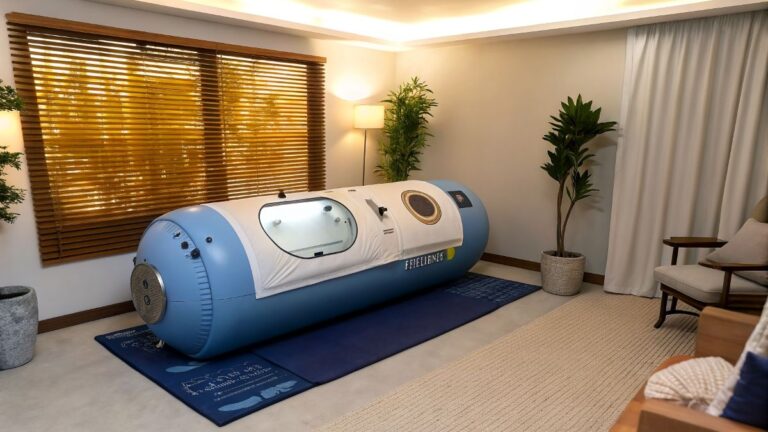
Soft chambers for home use typically max out at 1.3 ATA, which equals roughly 11 feet of simulated water depth [2].
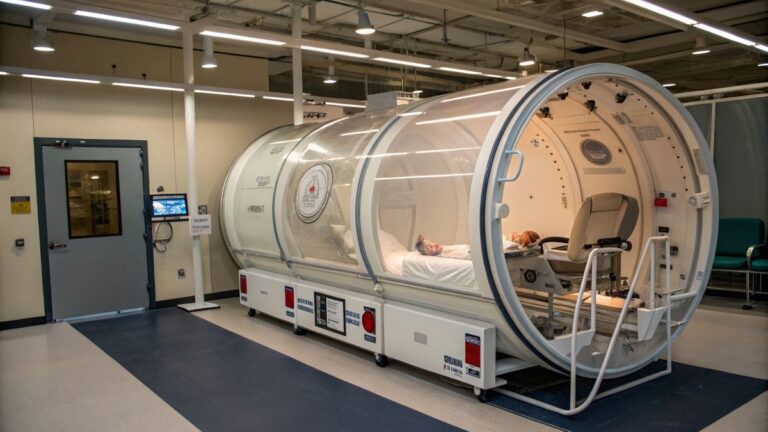
Some newer models push to 1.5 ATA. Hard shell chambers reach 2.0 to 3.0 ATA but cost $30,000 to $100,000 or more [3].
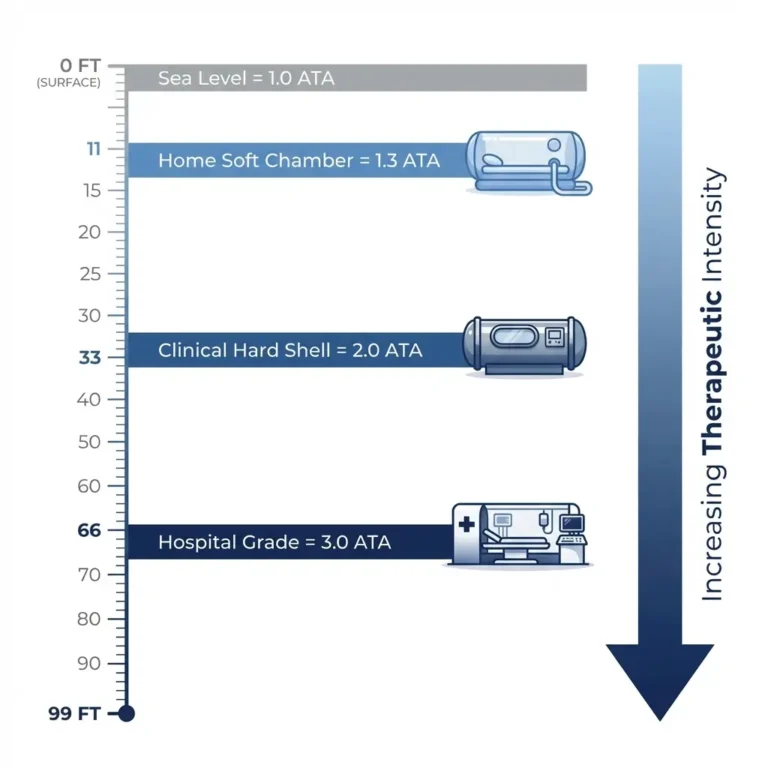
You cannot treat acute medical conditions at home. Gangrene, severe burns, carbon monoxide poisoning, and gas embolisms require 2.0+ ATA under direct medical supervision. The FDA has cleared HBOT at clinical pressures for 14 specific conditions [4].
Home HBOT at 1.3 ATA targets a different set of goals. Chronic inflammation reduction, cognitive support, post-workout recovery, and general tissue oxygenation are the realistic applications at this pressure range.
The Oxygen Mask Factor (Mask vs. Ambient)
“Do I actually need the oxygen mask, or can I just sit in the pressurized chamber?”
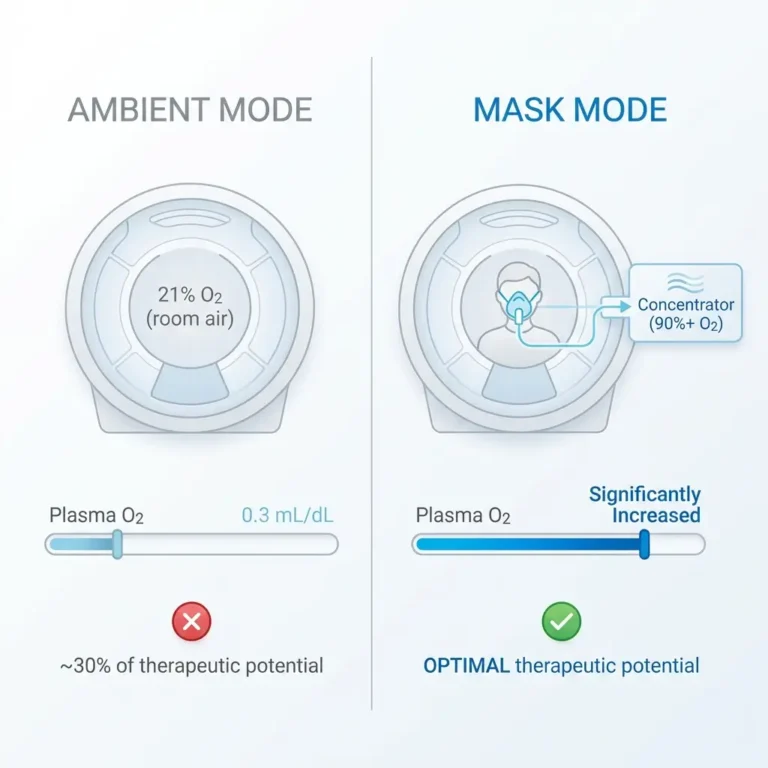
You CAN sit without a mask. You will breathe pressurized room air at 21% oxygen concentration. You will absorb slightly more oxygen than normal. And you will lose roughly 70% of the therapy’s potential.
The math explains why.
In ambient mode, you pressurize regular air. The partial pressure of oxygen increases modestly because the overall air pressure rises, but oxygen remains at 21% of the gas mix.
In mask mode, you breathe 90%+ concentrated oxygen from an oxygen concentrator while under pressure. This combination drives dissolved oxygen in your blood plasma from the normal 0.3 mL/dL up toward levels where tissue saturation becomes meaningful [5].
At 3.0 ATA with 100% O2 in clinical settings, plasma dissolved oxygen reaches approximately 6.0 mL/dL [6].
Henry’s Law governs this entire mechanism. The amount of gas that dissolves in a liquid is directly proportional to the partial pressure of that gas above the liquid [7].
Raise the pressure, raise the oxygen concentration, and you push more O2 into plasma, cerebrospinal fluid, lymph, and interstitial tissue.
At 1.3 ATA with a 90%+ concentrator mask, you sit at the lower end of the therapeutic window. Without the mask, you sit below it.
Buy a concentrator. Use the mask. Otherwise, you are paying thousands of dollars to sit inside a pressurized sleeping bag breathing normal air.
The Hidden Health Risk: Material Toxicity & Off-Gassing
The Phthalate Problem
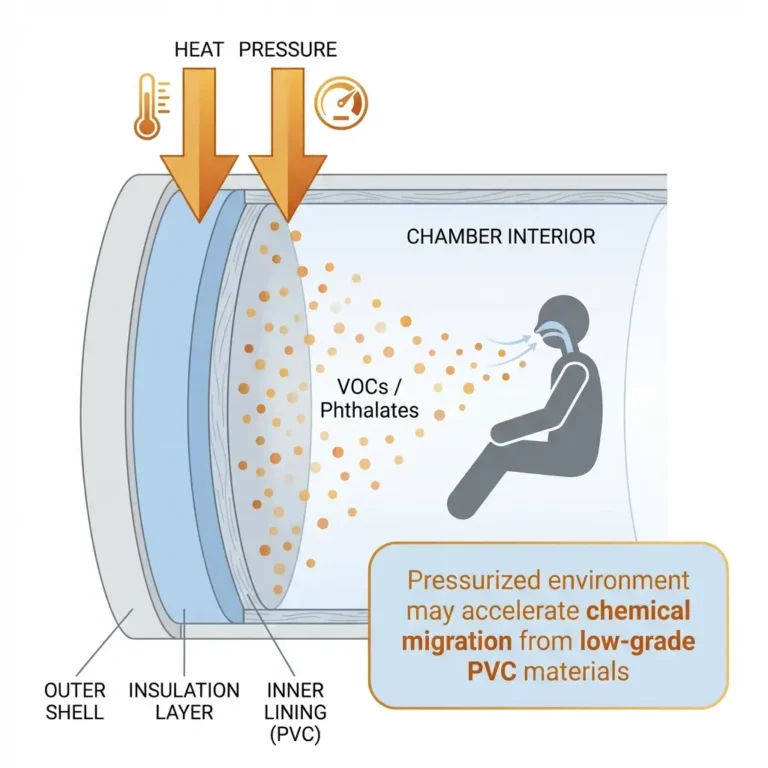
Phthalates are plasticizer chemicals added to PVC (polyvinyl chloride) to make it soft and flexible. They do not bond permanently to plastic. Over time, they migrate out of the material through a process called off-gassing [8].
Many cheap, unbranded chambers imported from overseas use low-grade PVC in their construction. Under normal room conditions, these materials release Volatile Organic Compounds (VOCs) slowly. Inside a pressurized chamber, the release accelerates.
Heat plus pressure equals accelerated off-gassing. Your body generates heat inside a sealed TPU or PVC shell. The compressor adds warmth. The increased atmospheric pressure forces molecular movement. You breathe these compounds at higher partial pressures, which may increase absorption into your bloodstream [9].
The CDC has found phthalate metabolites in the urine of most Americans tested, suggesting widespread background exposure [10].
The concern with HBOT is concentrated, repeated exposure in a sealed environment during 60 to 90 minute sessions, often multiple times per week.
Phthalates function as endocrine disruptors. Peer-reviewed research has linked exposure to decreased testosterone levels in men and reproductive health disruption [11].
Children and pregnant women face particular vulnerability to endocrine-disrupting chemicals [12].
Using a toxic chamber for “wellness” creates the exact opposite outcome.
How to Verify Safety
Look for chambers built with medical-grade TPU (Thermoplastic Polyurethane) that carry phthalate-free certifications. Legitimate certifications include REACH compliance (the European chemical safety standard), ISO 10993 biocompatibility testing, and USP Class VI testing [13].
(Ed. note: the EPA has classified several phthalates as probable human carcinogens, though specific studies measuring HBOT chamber exposure levels remain limited.)
Perform the “new car smell” test. A high-quality medical chamber should not smell strongly of chemicals when you first unpack it. A sharp chemical odor indicates active off-gassing.
Ask the manufacturer directly for VOC emission test results and Material Safety Data Sheets. Companies confident in their materials answer these questions openly. Vague responses or refusal to provide documentation is a red flag.
Accessibility & Mobility: Getting In and Out
The Entry/Exit Struggle
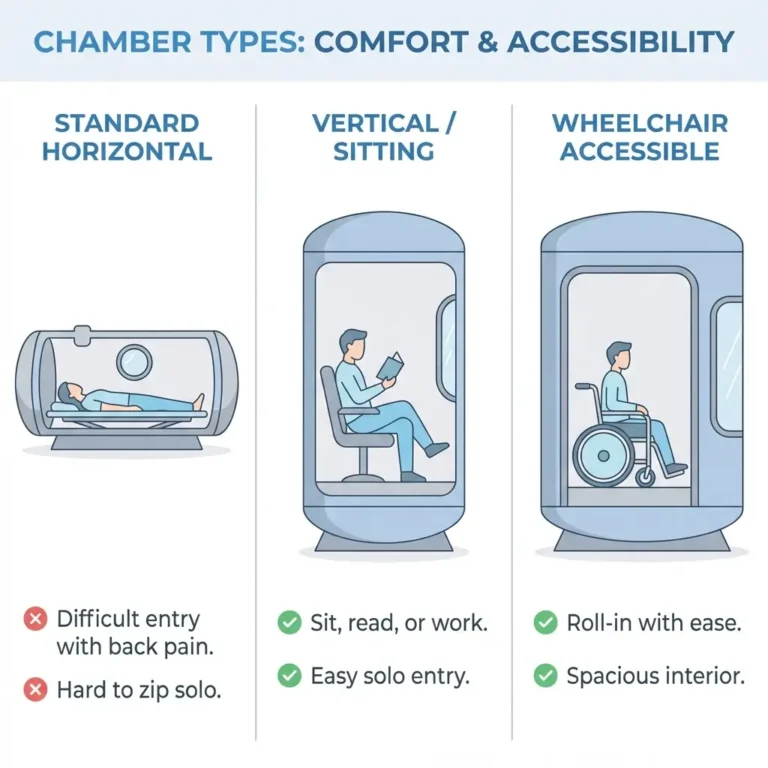
Most standard soft chambers are horizontal tubes. You lay flat, slide in feet-first, and zip yourself inside.
This works fine if you are flexible, have no back pain, and can manage the zipper system solo. For anyone with limited mobility, spinal issues, or joint problems, the entry process becomes a serious barrier. Caregivers often need to help with the zipper from outside, which creates dependence on another person for every single session.
“What if I live alone and have mobility issues?”
Standard horizontal chambers become impractical. The narrow opening, floor-level entry, and internal zipper systems make solo use difficult or impossible for people with physical limitations.
The Solution: Vertical and Wheelchair Accessible Chambers
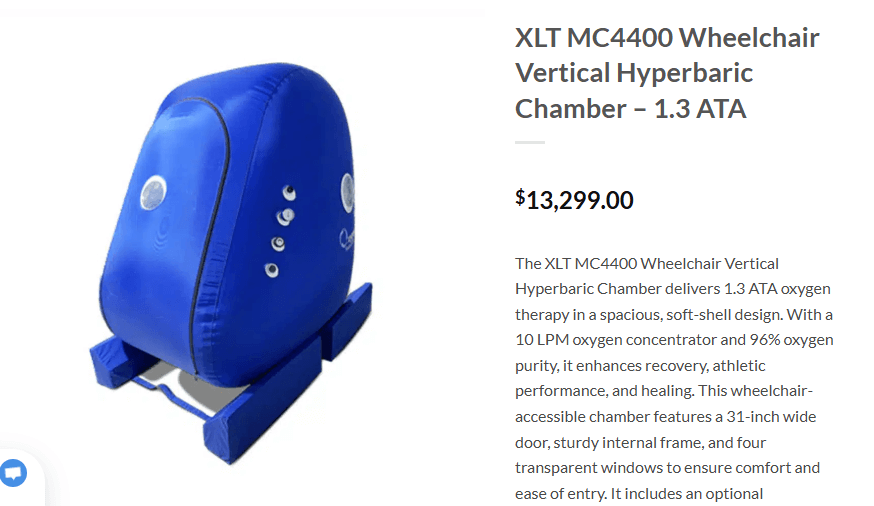
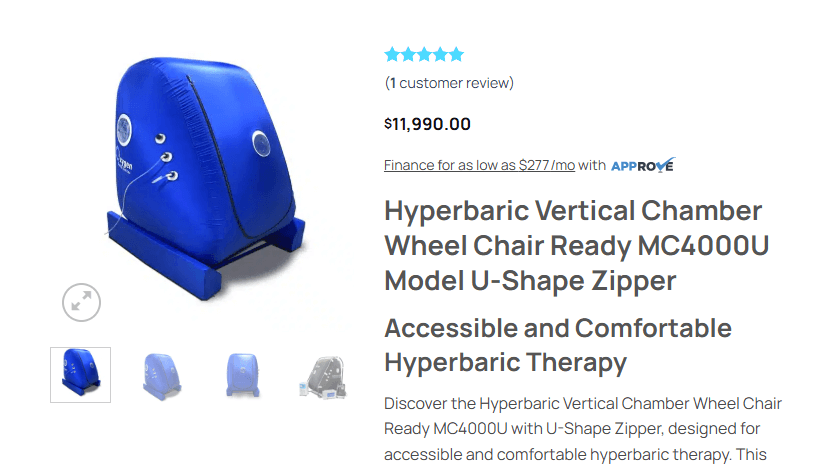
Vertical (sitting-type) chambers solve the accessibility problem. You walk in or roll a wheelchair through a wide U-shaped zipper opening, sit in a chair, and begin your session. Some models stand over 5 feet tall with 32-inch or wider doorways [14].
HyperbaricPRO carries the XLT MC4400, a wheelchair-compatible vertical chamber rated at 1.3 ATA with a 3-year warranty [15].
Oxygen Health Systems offers the MC400U model with a U-shape zipper designed specifically for wheelchair entry [16].
Sitting chambers also let you read, work on a laptop (if the manufacturer permits electronics, and many do at lower pressures), or simply sit comfortably during the session.
If mobility is a concern for you or anyone in your household, do not buy a standard horizontal tube. The extra cost of a vertical model pays for itself in daily usability.
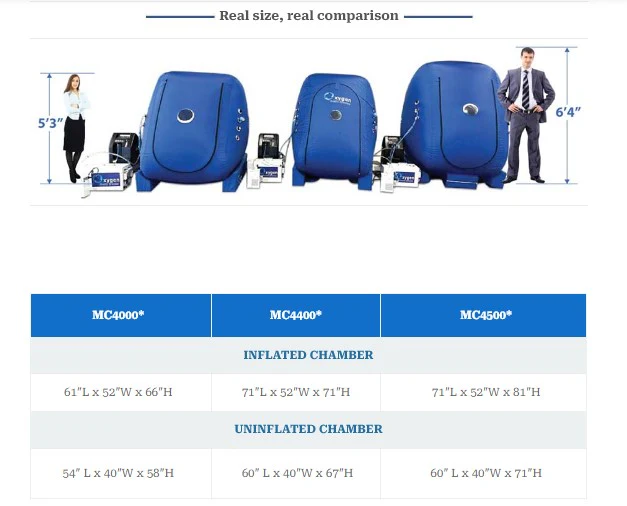
Managing Noise, Heat & Space
The Heat Problem (Greenhouse Effect)
Body heat gets trapped inside the TPU or PVC shell. The compressor pushes warm air into the chamber during pressurization. After 20 to 30 minutes, the interior temperature climbs noticeably.
Some manufacturers sell internal air cooling systems as add-ons. A budget alternative is placing frozen water bottles inside the chamber before your session.
Both approaches work; neither is elegant. But ignoring the heat problem makes 60 to 90 minute sessions uncomfortable, particularly in warmer climates.
The Noise Factor (50 dB to 70 dB)
A home HBOT system includes a compressor and, if you follow the advice in Section 1, an oxygen concentrator. Both produce continuous noise.
Typical home systems range from 50 to 70 decibels depending on quality [17].
The lower end resembles a normal conversation. The upper end sounds like a loud refrigerator or a running dishwasher.
You solve this with extended hoses. Buy 10-foot (or longer) connection hoses to place the compressor and concentrator in a closet, hallway, or adjacent room. This single upgrade transforms the in-chamber experience from noisy and distracting to quiet and productive.
Safety Protocols: Fire, Oxygen & Grounding
The Oxygen Fire Triangle
Oxygen-enriched environments amplify fire risk. The FDA issued a formal safety letter to healthcare providers in August 2025, warning about fire-related injuries and deaths with HBOT devices [18]. The Australian TGA followed with a similar warning in October 2025 [19].
When you use an oxygen concentrator with a mask inside the chamber, some oxygen inevitably leaks into the ambient environment. NFPA 99 (the National Fire Protection Association’s Health Care Facilities Code) defines any atmosphere above 23.5% oxygen concentration as oxygen-enriched and hazardous [20].
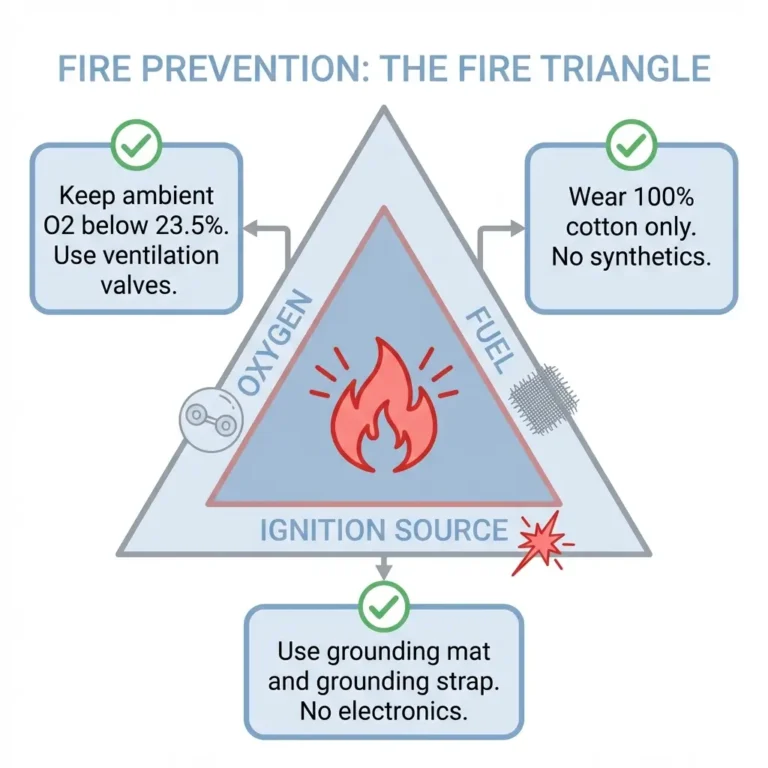
Your chamber must have proper ventilation valves that continuously cycle air to prevent oxygen buildup. Check that your specific model meets this requirement before you buy.
Grounding is Non-Negotiable
Dry, pressurized air combined with synthetic fabrics generates static electricity. Static discharge in an oxygen-enriched environment creates fire risk. This is physics, not theory.
NFPA 99 requires hyperbaric chambers to be grounded with no more than 1 ohm of resistance [21]. You need a grounding mat inside the chamber, and you should wear a grounding strap during sessions.
“Where do I get a grounding mat?”
Retailers like Oxygen Health Systems often include them with chamber purchases [22]. You can also find standalone grounding/earthing mats at specialty wellness retailers.
Clothing rules are simple and non-negotiable. NEVER wear synthetic fabrics inside a hyperbaric chamber. No polyester, no nylon, no spandex. Wear 100% cotton only. Synthetic fibers generate static. Static plus elevated oxygen equals fire. Follow this rule every session, no exceptions.
Cost Analysis & ROI
Renting vs. Buying
Renting a home chamber runs approximately $1,000 to $2,500 per month depending on the model and vendor [23].
Renting makes sense for short-term use during acute injury recovery, typically 1 to 3 months.
Buying a quality soft chamber costs $5,000 to $20,000 upfront [24].
Hard shell chambers for home use start around $30,000. The concentrator adds $1,500 to $3,000 on top.
The Family ROI
The math shifts dramatically when multiple family members use the chamber.
A clinic charges $100 to $250 per person per session [1].
If three family members each do 5 sessions per week at $150 average, that totals $2,250 per week, or roughly $9,000 per month in clinic costs.
A $10,000 home chamber pays for itself within 5 to 6 weeks at that usage rate.
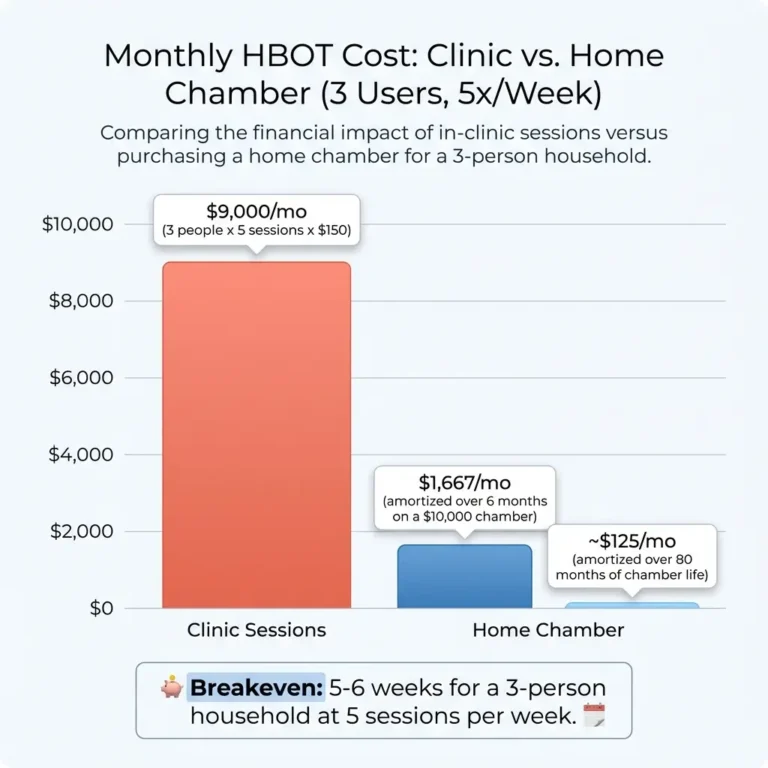
Even at lower usage, say 3 sessions per week for 2 people at $150 per session, you hit $3,600 per month in avoided clinic fees. The chamber reaches breakeven in under 3 months.
“What about resale?”
Quality chambers from reputable manufacturers sell for 30% to 50% of original retail price on the secondary market [25]. A $10,000 chamber in good condition with documentation can sell for $3,000 to $5,000.
Cheap, off-brand units have almost zero resale value because buyers on the secondary market now know to ask about materials and phthalates.
Where to Buy: Avoiding Low-Quality Imports
Why Vendor Matters
You are buying a pressurized medical device. After-sale support determines whether your investment lasts 5+ years or becomes a headache within months.
You need a vendor who stocks replacement valves, zippers, seals, and compressor parts. You need a vendor who answers the phone when your pressure gauge reads wrong or your zipper fails at 11 PM.
Foreign direct sellers, particularly unbranded Alibaba-sourced chambers, disappear after the sale. No replacement parts. No warranty support. No material certifications. You save $2,000 upfront and pay for it in frustration, safety risk, and zero resale value.
Prescription handling also matters. HBOT chambers are Class II medical devices cleared by the FDA through the 510(k) process [18].
Most US-based sellers require a prescription for purchase. Reputable vendors can help facilitate a telehealth consultation with a physician who understands HBOT and can write the required prescription.
Recommended Retailers
- HyperbaricPRO.com carries a wide selection of chambers including vertical, wheelchair-accessible, and standard horizontal models. Their catalog includes the XLT MC4400 wheelchair chamber and walk-in vertical models at 1.3 ATA [15]. They stock compressors, concentrators, and replacement parts. Commercial-grade durability with US-based phone support.
- OxygenHealthSystems.com specializes in integrated systems that pair chambers with high-flow oxygen concentrators. Their chambers use German-sourced PET polyester with TPU construction, triple-layered at 44-ounce weight [26]. They include grounding systems, dual-action air conditioning, and redundant pressure-regulating valves. Their 32-inch models carry explicit phthalate-free certification [26]. Oxygen Health Systems also publishes material safety documentation directly on their website.
Key Takeaways Checklist
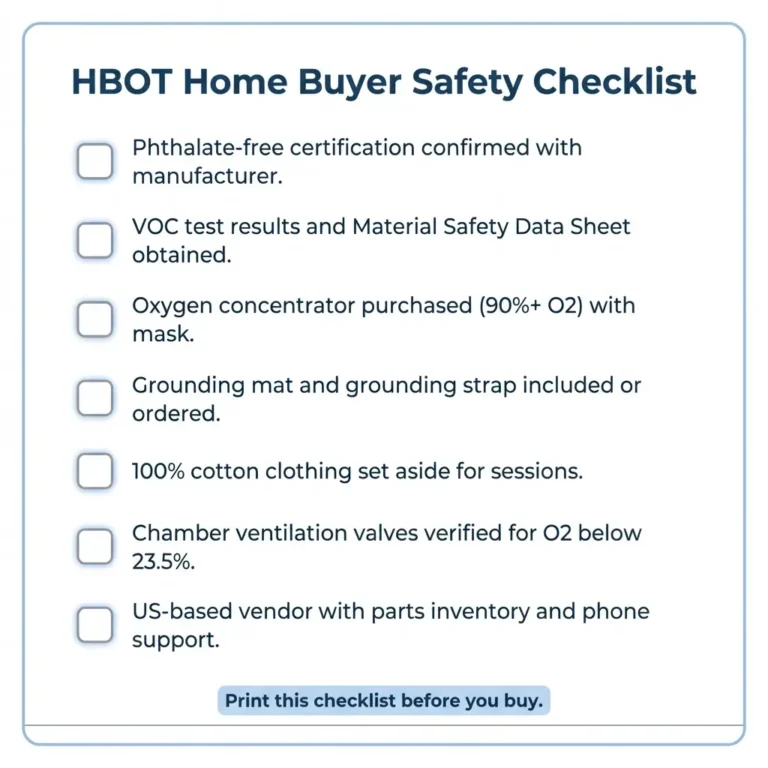
- Check for “phthalate-free” materials and request VOC test results before purchasing. Avoid any chamber built with unspecified PVC.
- Use a mask connected to a 90%+ oxygen concentrator during every session. Ambient-only mode delivers a fraction of the therapeutic benefit.
- Wear 100% cotton clothing and use a grounding mat inside the chamber. Synthetics generate static. Static plus oxygen creates fire risk.
- Consider vertical or sitting-type chambers if you or a family member has mobility limitations. Standard horizontal tubes create access barriers.
- Buy from US-based retailers with parts inventory and phone support. HyperbaricPRO and Oxygen Health Systems both carry safety-vetted inventory and handle prescription logistics.
- Run the family ROI math before committing to ongoing clinic sessions. A home chamber often reaches breakeven within 2 to 6 months for multi-user households.
- Respect the physics. Home HBOT at 1.3 ATA treats chronic conditions and supports recovery. It does not replace clinical HBOT at 2.0+ ATA for acute medical emergencies.
Final Verdict
Home HBOT is a real health infrastructure investment for families, athletes, and anyone managing chronic inflammation or recovery protocols. The ROI math works, especially for households with multiple users.
But the investment only makes sense if you respect the physics and choose safe materials. A $4,000 chamber full of phthalates does more harm than good. A $10,000 chamber from a reputable vendor with phthalate-free certification, a quality concentrator, and proper grounding equipment delivers compounding returns over years of use.
Do not buy the cheapest option you find online. Prioritize material safety and air quality above all else. Visit HyperbaricPRO.com and OxygenHealthSystems.com to compare specs on material certifications, accessibility options, and integrated safety features.
References
- [1] Strength Warehouse USA, “How Much Does a Hyperbaric Chamber Cost: Home or Clinic”, September 2025.
- [2] Nardella Clinic, “Dangers and Deceptions of Soft Hyperbaric Chambers”, July 2013.
- [3] HBOT Research, “Phthalates in HBOT: A Complete Guide to Understanding the Risks and Choosing a Safe Chamber”, November 2025.
- [4] U.S. Food and Drug Administration, “Hyperbaric Oxygen Therapy: Get the Facts”.
- [5] NIH/PMC, “HYPERBARIC OXYGEN THERAPY [HBOT]”, June 2017.
- [6] Nature Scientific Reports, “The therapeutic effect of hyperbaric oxygen therapy in patients with…”, February 2024.
- [7] NCBI/StatPearls, “Hyperbaric Physics”.
- [8] PMC/NIH, “The Role of Exposure to Phthalates from Polyvinyl Chloride Products”.
- [9] U.S. EPA, Indoor Air Quality research on VOC release rates from new plastic products; referenced via HBOT Research [3].
- [10] Centers for Disease Control and Prevention, Biomonitoring Population Exposures.
- [11] Oxford Academic/Human Reproduction, “Endocrine disruption and male reproductive disorders: unanswered questions”, 2024.
- [12] Environmental Health Perspectives, “Preconception Phthalate Exposure and Women’s Reproductive Health”, 2023.
- [13] HBOT Research, referenced certifications list including REACH, ISO 10993, and USP Class VI, via [3].
- [14] HyperbaricPRO, “MC4000U Walk-In Vertical Hyperbaric Chamber”.
- [15] HyperbaricPRO, “XLT MC4400 Wheelchair Vertical Hyperbaric Chamber, 1.3 ATA”.
- [16] Oxygen Health Systems, “MC400U: Wheelchair-Ready Vertical Hyperbaric Chamber”.
- [17] Oxygen Health Systems, “How Quiet Are Home Hyperbaric Chambers”.
- [18] U.S. Food and Drug Administration, “Follow Instructions for Safe Use of Hyperbaric Oxygen Therapy Devices”, August 2025.
- [19] Australian Therapeutic Goods Administration, “Risk of fire during use of hyperbaric chambers”, October 2025.
- [20] NFPA, “NFPA 99 Health Care Facilities Code”, defining 23.5% O2 as oxygen-enriched atmosphere.
- [21] Wound Reference, “Hyperbaric Patient Grounding”, July 2025.
- [22] Oxygen Health Systems, “Hyperbaric Oxygen Chamber Grounding & Static Electricity”.
- [23] Axon Integrative Health, “At Home HBOT Chamber Cost Guide”.
- [24] Lannx, “Hyperbaric Oxygen Therapy Costs 2026: Clinic vs. Home Price Guide”, January 2026.
- [25] Oxygen Health Systems, “Buying a Used Hyperbaric Chamber: What You Need to Know”, May 2025.
- [26] Oxygen Health Systems, product page for 32-inch Hyperbaric Oxygen Soft Chamber, referenced via [3].