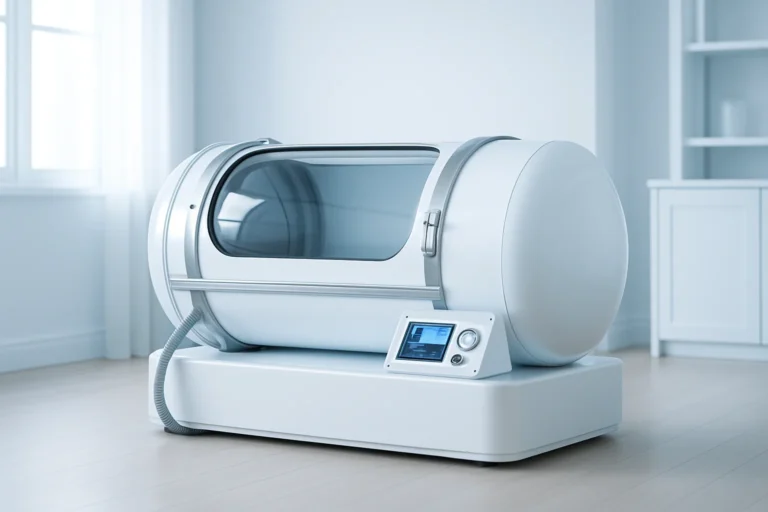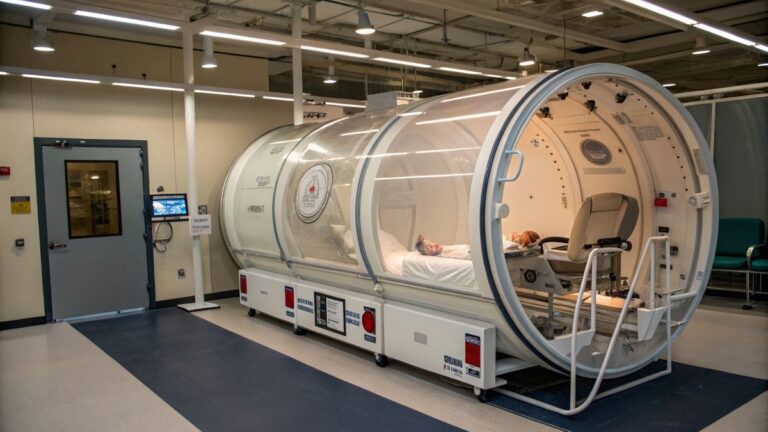
Hyperbaric oxygen therapy delivers pure oxygen at increased atmospheric pressure. This treatment may accelerate wound healing, reduce inflammation, and support recovery from various conditions according to medical literature [1].
Yet many soft-sided chambers potentially contain materials that release chemicals into the very air you breathe during treatment.
The concern centers on phthalates, which are plastic softeners that make vinyl and PVC flexible. These chemicals can off-gas into your breathing space, particularly under the unique conditions inside a hyperbaric chamber.
This guide examines the available evidence about phthalate exposure in HBOT chambers. You’ll learn which materials may pose risks, how to identify safer alternatives, and what questions to ask manufacturers before purchasing or using a chamber.
What Exactly Are Phthalates?
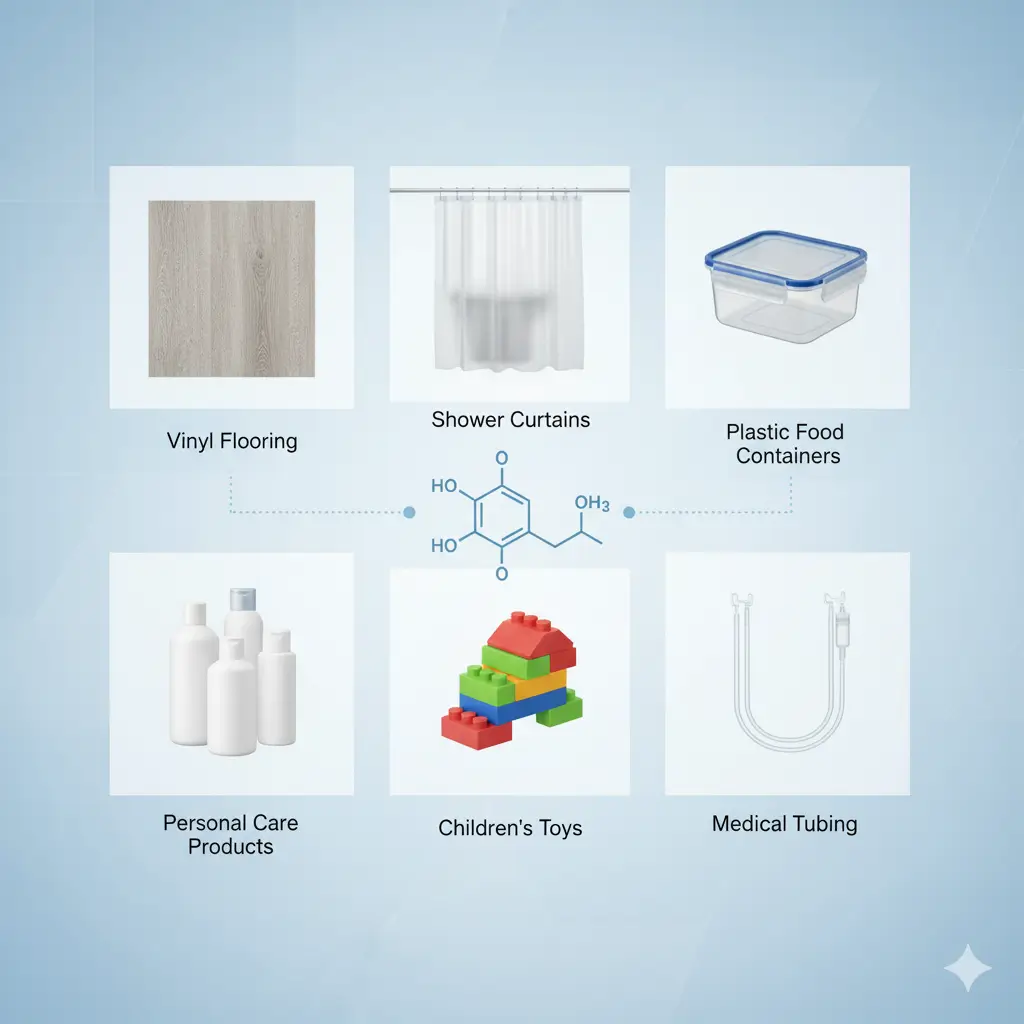
Phthalates are chemical compounds typically added to plastics to increase flexibility and durability. Manufacturers commonly use them in polyvinyl chloride (PVC) products, from shower curtains to medical tubing according to toxicology research [2].
You likely encounter phthalates daily in vinyl flooring, personal care products, food packaging, and children’s toys.
These chemicals don’t bond permanently to plastic. They can migrate out over time through a process called off-gassing.
CDC research has found phthalate metabolites (breakdown products from phthalates after your body processes them) in the urine of most Americans tested, suggesting widespread exposure [3].
The concern isn’t just presence but concentration. Inside a sealed hyperbaric chamber, you breathe concentrated air for extended periods. Any chemicals released from the chamber walls may accumulate in this enclosed space.
Why HBOT and Phthalates Don’t Mix?
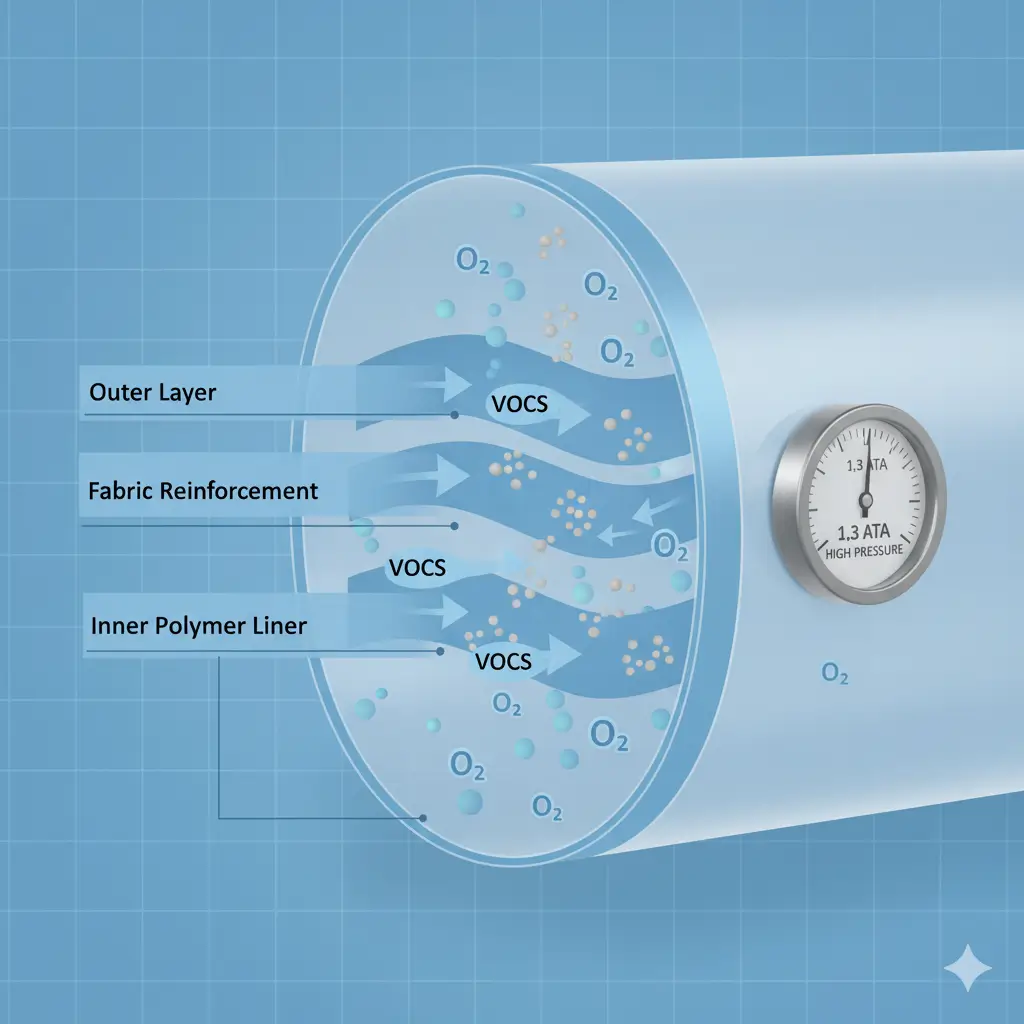
Off-gassing occurs when volatile organic compounds (VOCs), which are chemicals that easily become vapors at room temperature, escape from solid materials.
Temperature, pressure, and oxygen concentration typically affect this release rate.
HBOT chambers may create conditions for accelerated off-gassing. The increased pressure, often reported as 1.3 to 1.5 ATA (atmospheres absolute, a measurement where 1 ATA equals normal sea-level pressure) in soft chambers, could force molecules to move more rapidly.
Pure oxygen environments may oxidize materials, meaning the oxygen potentially breaks down the plastic faster than normal air would.
Sessions typically lasting 60 to 90 minutes provide extended exposure time according to standard protocols [4].
“But doesn’t the chamber have ventilation?” – You’re right to ask.
Most soft chambers continuously cycle air through the system. However, if the chamber walls themselves release chemicals, fresh oxygen flow won’t eliminate the source of contamination.
EPA research on indoor air quality indicates that new plastic products often release the highest levels of VOCs during their first months of use [5].
This “new plastic smell” typically signals active off-gassing. In a hyperbaric environment, you’re potentially breathing these compounds under pressure, which may increase absorption into your bloodstream.
Health Risks of Phthalate Exposure
Phthalates may function as endocrine disruptors, chemicals that can interfere with your hormone systems.
Research from environmental health organizations suggests links between phthalate exposure and reproductive issues, developmental problems in children, and metabolic disruption [6].
Studies in peer-reviewed journals have reported associations between phthalate exposure and decreased testosterone levels in adult men [7].
Additional research has suggested connections between prenatal phthalate exposure and behavioral changes in children [8].
The risk potentially compounds with repeated exposure. If you use HBOT daily or several times weekly, you may face cumulative chemical exposure. Children and pregnant women typically show particular vulnerability to endocrine disruptors according to pediatric research [9].
(Ed. note: The EPA has classified several phthalates as probable human carcinogens, though specific studies on cancer risk from HBOT chamber exposure appear limited.)

Hard Shell vs. Soft Shell Chambers
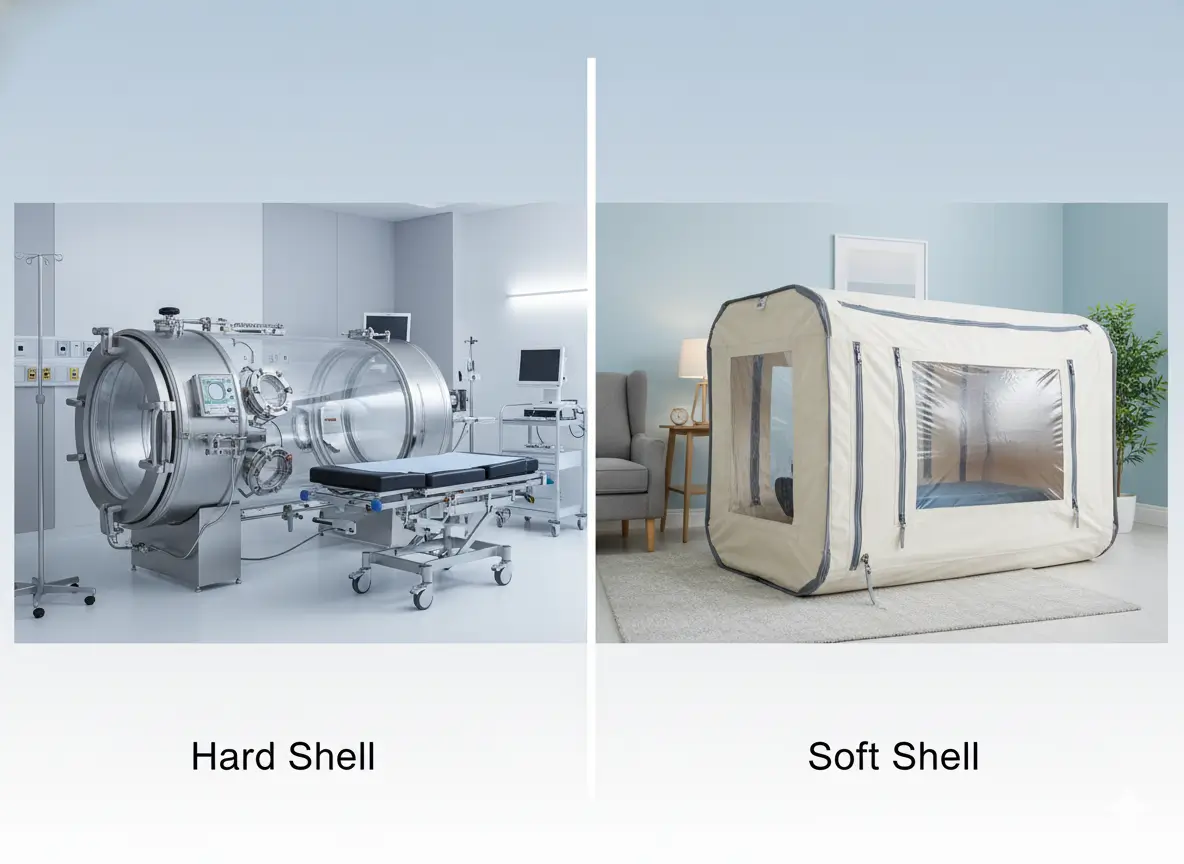
Hard shell chambers typically use steel or aluminum frames with acrylic viewing ports. These materials generally don’t contain phthalates.
Medical facilities usually employ hard chambers that operate at higher pressures (often 2.0 to 3.0 ATA) for FDA-approved treatments.
Soft shell chambers consist of flexible materials, commonly polyurethane or PVC. The flexibility that makes them portable and affordable often comes from plasticizers. Not all soft materials contain phthalates, but many may, particularly those using PVC construction.
The price difference reflects more than just materials.
Hard chambers may cost approximately $30,000 to $100,000 based on market surveys. Soft chambers typically range from approximately $8,000 to $20,000.
For home users, soft chambers often represent the only practical option. This makes material safety even MORE CRITICAL.
Not All Soft Chambers Are Created Equal
What to Avoid
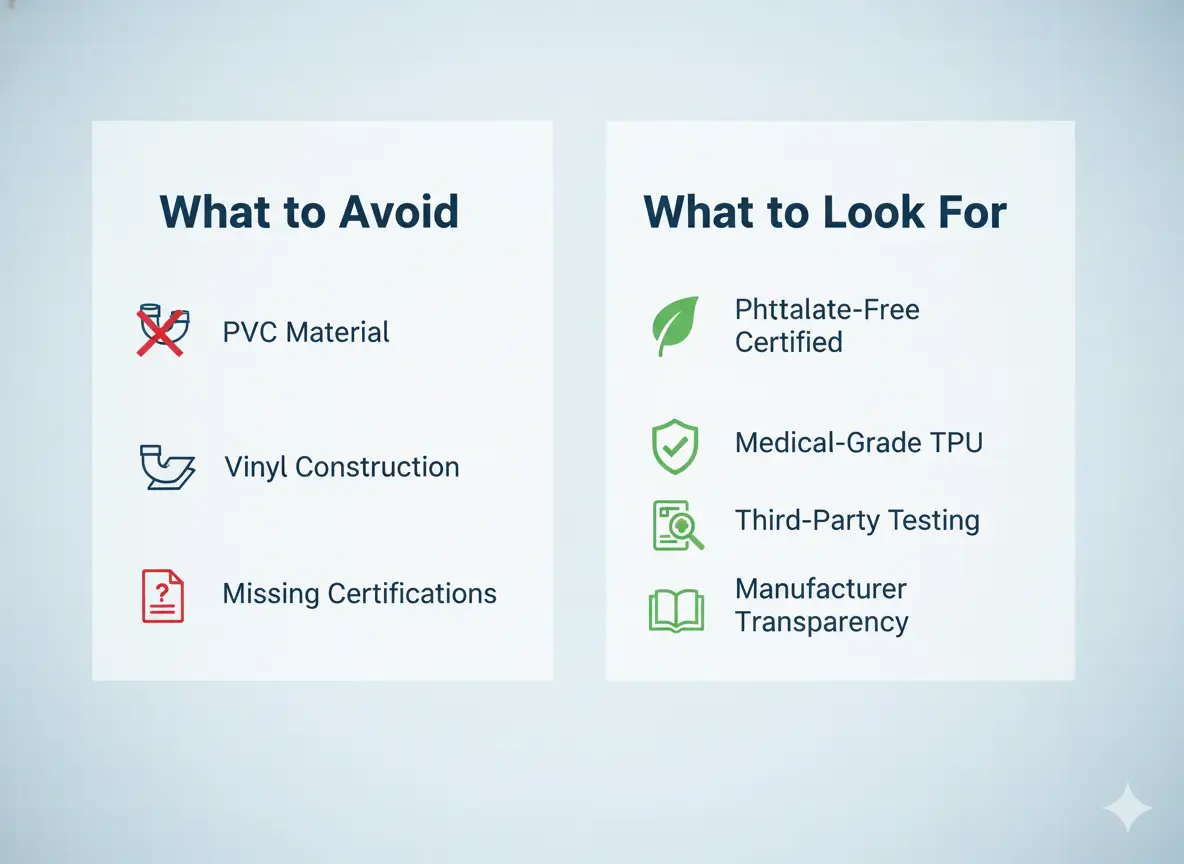
- PVC-based chambers may pose the highest risk for phthalate exposure. Look for terms like “vinyl,” “PVC,” or “polyvinyl chloride” in product descriptions. Chambers imported from manufacturers without clear material specifications may warrant EXTREME CAUTION.
What to Look For
- Phthalate-Free Certifications: Legitimate manufacturers often test their products through independent laboratories. They may display certifications like REACH compliance (Registration, Evaluation, Authorisation and Restriction of Chemicals, a European chemical safety standard) or CPSIA compliance (Consumer Product Safety Improvement Act, a U.S. consumer product safety regulation) [10]. Other Certifications may include:
- CE and ISO 13485:2016 Certification — Ensures quality management systems and medical device compliance
- EN14931 (PVHO Standard) — The European Standard for pressure vessels for human occupancy and hyperbaric chambers, which specifically addresses material safety and fire prevention requirements
- FDA 510(k) Clearance — Applies to certain U.S. manufacturers like OxyHealth, Summit to Sea, and AHA Hyperbarics
- Biocompatibility Testing — Materials including TPU and PET must pass ISO 10993 standards and USP Class VI testing to ensure they are non-cytotoxic and do not leach harmful substances
- Medical-Grade Materials: This designation typically means materials meet biocompatibility standards, tests that generally ensure materials are safe for prolonged human contact. FDA guidelines suggest medical-grade plastics undergo USP Class VI testing, which evaluates biological reactivity by testing materials with living tissue cultures and monitoring for potential toxic responses [11]. Thermoplastic polyurethane (TPU) without phthalate plasticizers may offer a safer alternative to PVC.
- Third-Party Testing Results: Reputable companies often provide VOC emission test results. These tests typically measure actual off-gassing rates under standard conditions. Consider requesting these documents before purchasing.
- Manufacturer Transparency: Companies confident in their materials usually discuss chemical composition openly. They typically answer specific questions about plasticizers, provide material safety data sheets, and explain their testing protocols.
“Why should I trust certifications?” Good question.
Third-party certifications generally require independent laboratory verification. Companies typically invest thousands of dollars for these tests. Fake certifications risk legal action and business closure. Consider verifying certification numbers directly with the certifying body’s website.
Questions to Ask Your HBOT Provider or Chamber Manufacturer
Contact manufacturers directly with these specific questions:
- “What exact materials compose your chamber shell?”
- “Do you use PVC or vinyl anywhere in the chamber construction?”
- “Can you provide certification that your chambers are phthalate-free?”
- “What third-party testing have you conducted for VOC emissions?”
- “Do you have material safety data sheets available for review?”
- “How do you recommend minimizing any potential off-gassing?”
- “What is your warranty policy if testing reveals chemical emissions?”
Document their responses. Vague answers or reluctance to provide documentation may signal potential problems.

Red Flags to Watch Out For When Buying a Home Chamber
Several warning signs may indicate potentially unsafe products:
- Suspiciously Low Prices: Chambers priced significantly below market average often cut corners on materials. Quality non-toxic materials typically cost more to manufacture.
- Missing Material Information: Legitimate companies usually display material specifications prominently. Websites lacking this basic information may raise concerns.
- No Customer Support: Test the company’s responsiveness before purchasing. Call or email with questions about materials. No response or evasive answers could indicate problems.
- Generic Product Descriptions: Beware listings that use stock photos or generic descriptions without specific model information.
- No Certifications or Testing: Reputable manufacturers typically invest in safety testing and certification. Their absence may suggest cost-cutting at your health’s expense.
Recommended Vendors for Phthalate-Free HBOT Chambers
Finding safe chambers requires extensive research. Fortunately, we’ve done the research for you.. Here are Hyperbaric Oxygen Therapy chamber manufacturers that manufacture Phthalate-Free HBOT Chambers.
Important Disclaimer: Manufacturing processes and materials can change. Always verify current specifications, request independent test results, and confirm material composition for your specific model before purchasing. Research multiple options and compare documentation carefully.
Top-Tier Manufacturers with Phthalate-Free Certification
1. Oxygen Health Systems
Oxygen Health Systems represents a leading option for phthalate-free chambers. Their Hyperbaric Oxygen Soft Chambers (available in 32-inch models at 1.3 ATA and 1.5 ATA) are explicitly certified phthalate-free with no off-gassing.
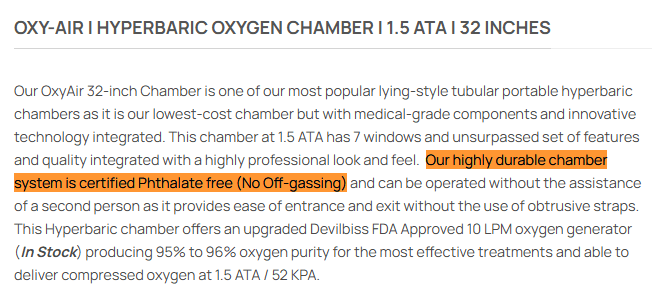
The company, established in 2016 with over 120 years of combined engineering and manufacturing experience, uses a 44-ounce triple-layered design featuring German-sourced PET polyester with TPU material.
Their chambers are designed for single-person operation without obtrusive straps and include upgraded DeVilbiss FDA-approved 10 LPM oxygen generators producing 95-96% oxygen purity.
These systems feature dual-action air conditioning, redundant pressure-regulating valves, and continuous airflow monitoring.
2. AHA Hyperbarics
AHA Hyperbarics (Vienna, Austria) represents another premium manufacturer. Their AHA Fit hyperbaric chambers and the comprehensive AHA Home System are manufactured without toxic gluing techniques and use heat-welded high-frequency technology.
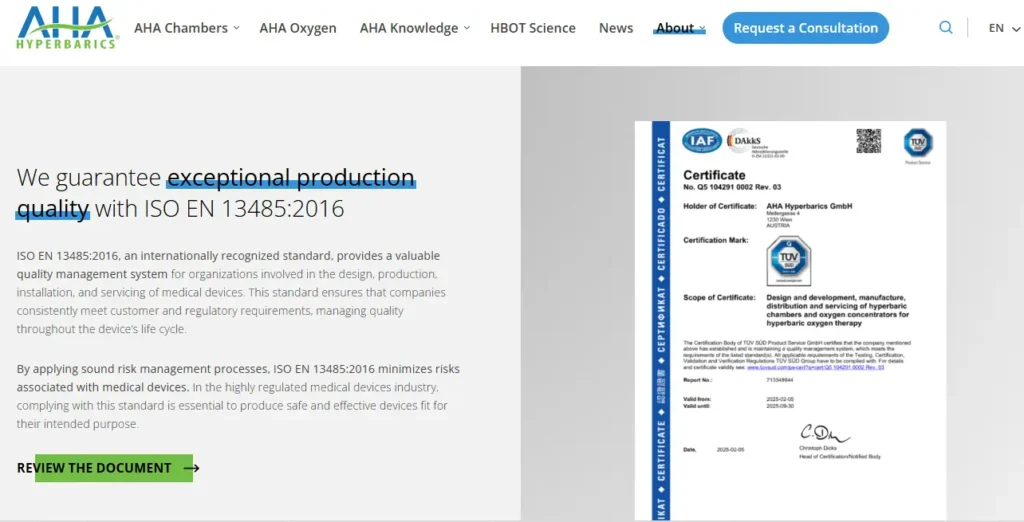
The materials are oxygen-proof and have been tested for oxygen compatibility. AHA Hyperbarics holds ISO EN 13485:2016 certification (exceptional production quality), EC Certificate (CE 0123) for safety and efficiency, and is the only inflatable system meeting the rigorous PVHO EN 14931:2006 standards equivalent to hard chambers.
Their systems are FDA-approved for U.S. distribution.
3. Newtowne Hyperbarics
Newtowne Hyperbarics has manufactured hyperbaric chambers for nearly 20 years, producing chambers from hypoallergenic, medical-grade materials including 46-ounce heavy-duty, double-laminated ballistic-grade nylon.
The company’s 100% American-built chambers feature hypoallergenic construction and come with a standard two-year warranty. Available models range from 27-inch compact chambers to 40-inch multiplace units.
4. OXYREVO
OXYREVO manufactures soft hyperbaric chambers using medical-grade thermoplastic polyurethane (TPU) material that is both safe and highly hygienic.
The company emphasizes non-toxic construction by using high-frequency welding technology rather than toxic glues, producing chambers that are pollution-free and odor-free. Their Forward90 sitting-type chamber represents an innovative design allowing users to sit or recline during therapy.
5. Summit to Sea
Summit to Sea represents an FDA-cleared manufacturer with over 30 years of Class II chamber manufacturing experience.
Their hyperbaric chambers are made in the USA and include multiple models from the entry-level Shallow Dive ($7,995) to professional-grade options.
The company emphasizes safety and has implemented redundant compressors for added security.
The Role of the FDA in HBOT Chamber Safety
The FDA typically regulates hyperbaric chambers as Class II medical devices when marketed for medical use, though classifications may vary [12].
This classification generally requires manufacturers to demonstrate “substantial equivalence” to existing approved devices. However, FDA clearance often focuses on therapeutic effectiveness and basic safety, not necessarily comprehensive chemical emission testing.
FDA approval doesn’t guarantee phthalate-free construction. The agency primarily evaluates whether chambers maintain proper pressure, deliver appropriate oxygen concentration, and meet electrical safety standards. Material composition typically falls under general biocompatibility requirements, which may not specifically address phthalate content.
You should advocate for your own chemical safety beyond regulatory minimums. Regulatory approval typically provides a baseline, not complete assurance of non-toxic materials.
(Ed. note: Some chambers sold for “wellness” or “fitness” purposes may not undergo FDA review at all, potentially making material verification even more critical.)
Frequently Asked Questions
Making an Informed and Safe HBOT Choice
The concern about phthalates in HBOT chambers appears legitimate but manageable. You don’t necessarily need to avoid hyperbaric therapy. You need to choose equipment carefully.
Safe chambers likely exist at various price points. Manufacturers who prioritize health typically use non-toxic materials and provide transparency. Your job involves asking direct questions, requesting documentation, and refusing to compromise on safety.
“What if I already bought a chamber and I’m worried?”
First, identify your chamber’s materials. Contact the manufacturer for documentation. If they used PVC, consider professional VOC testing. You might also increase ventilation time between sessions and ensure good airflow in your treatment space.
The solution starts with awareness. Now you understand what phthalates are, why they may matter in HBOT, and how to identify potentially safer alternatives. Use this knowledge to protect yourself and your family.
Take control of your health journey. Demand better from manufacturers. Choose chambers that support your healing without potentially introducing new risks. Your health deserves nothing less than complete safety.
References
- [1]. Undersea and Hyperbaric Medical Society (UHMS) – Research on HBOT Indications and Applications
- [2]. Clinical Research on HBOT Mechanisms and Protocols – https://www.mdpi.com/1648-9144/57/9/864
- [3]. HBOT Pressure Standards and Protocols – Guidelines to the Practice of Hyperbaric Medicine in Canada” with standardized pressure protocols (1.5-2.8 ATA)
- [4]. FDA Approval and Safety Guidelines – FDA Consumer Information on Hyperbaric Oxygen Therapy
- [5]. Equipment Standards and Medical Device Regulations – ASME Standards for Principles of Safety and Performance for Medical Hyperbaric Chambers
- [6]. Phthalate Exposure Assessment and Biomonitoring – “Comprehensive review of phthalate exposure: Health effects and biomonitoring methods” (2025)
- [7]. Phthalates and Endocrine Disruption – Endocrine disruption and male reproductive disorders: unanswered questions” from Human Reproduction (2024)
- [8]. Prenatal Phthalate Exposure and Child Development – “Preconception Phthalate Exposure and Women’s Reproductive Health” from Environmental Health Perspectives” (2023)
- [9]. Female Reproductive Health and Phthalate Exposure – “Center for Science in the Public Interest: “Phthalates linked to lower fertility in men and women” (2024)
- [10]. Male Reproductive Health and Phthalate Exposure – “Recent Updates on the Effect of Endocrine Disruptors on Male Reproductive Functions” (2022)
- [11]. Phthalate Regulatory Information – “EU Expands Restriction of Phthalates Under REACH” (2019)
- [12]. Centers for Disease Control and Prevention – Biomonitoring Data