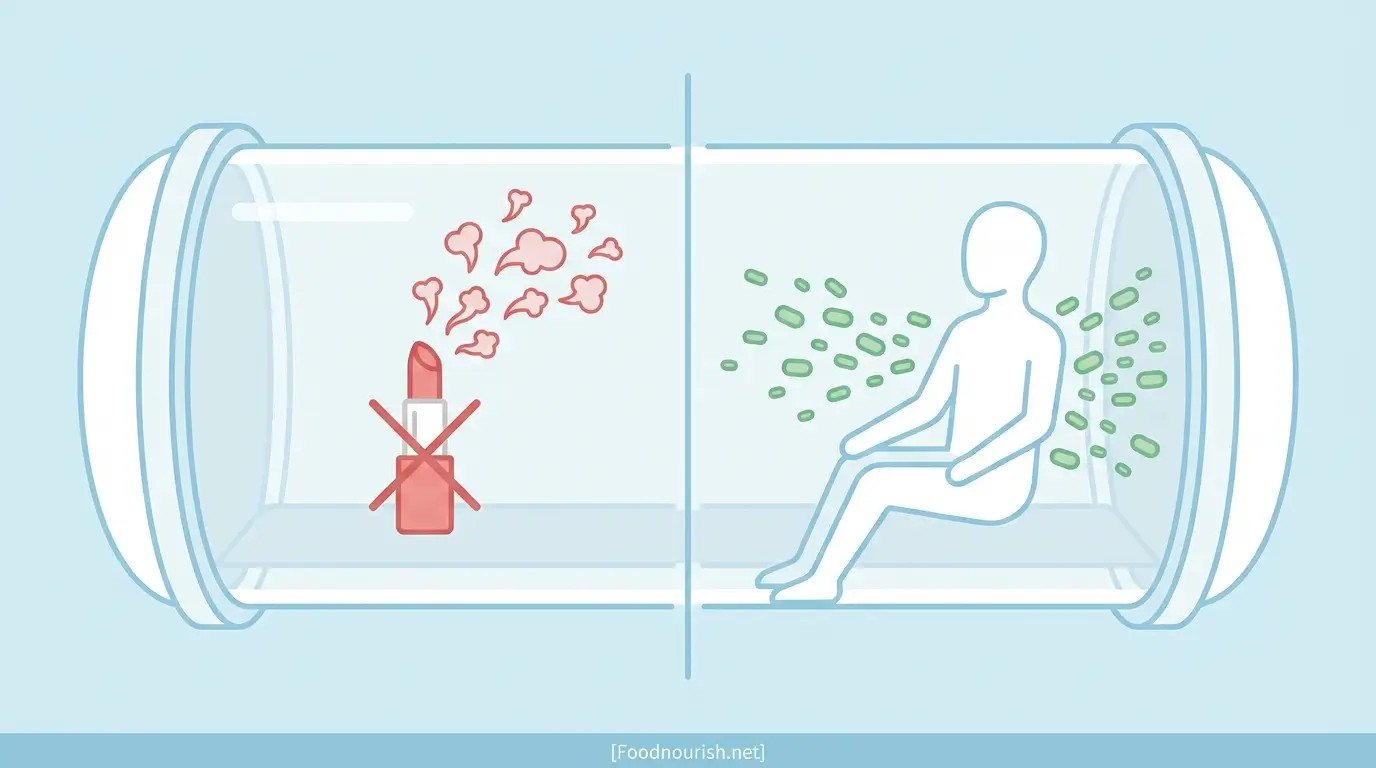
When you hear “off-gassing” in the context of Hyperbaric Oxygen Therapy (HBOT), you’re actually hearing about two completely different phenomena. One could harm you. The other could heal you.
The first meaning refers to the dangerous release of chemical fumes from materials inside a pressurized chamber. Plastics, cosmetics, and synthetic fabrics can emit Volatile Organic Compounds (VOCs) when exposed to high-pressure oxygen environments. This creates fire and toxicity risks that require strict safety protocols.
The second meaning describes what happens inside your body during treatment. HBOT saturates your tissues with oxygen, giving cells the energy they need to flush out stored toxins, heavy metals, and metabolic waste. Some practitioners call this biological “off-gassing” or cellular detoxification.
Understanding this distinction matters because it affects both your safety decisions and your healing expectations. This guide covers the safety protocols you must follow, how to identify a safe chamber when buying, and the biological detox processes you can expect during treatment.
Material Off-Gassing Inside the Chamber
What is Technical Off-Gassing?
Technical off-gassing = the release of Volatile Organic Compounds (VOCs) and chemical vapors from solid materials into the surrounding air.
At normal atmospheric pressure, many materials remain stable. Your yoga pants, lip balm, and smartphone battery all behave predictably at sea level. Inside a hyperbaric chamber, everything changes.
HBOT chambers operate at 1.5 to 3.0 atmospheres absolute (ATA), and many deliver 100% oxygen. This combination fundamentally alters material behavior. Increased pressure compresses gas molecules and accelerates chemical reactions. High oxygen concentration turns normally safe materials into potential fuel sources.
- A nylon shirt that sits quietly in your closet for years can release flammable vapors under pressure.
- A petroleum-based moisturizer becomes a fire accelerant.
- The same smartphone battery that powered your morning commute becomes an ignition hazard.
Sources of Dangerous Fumes
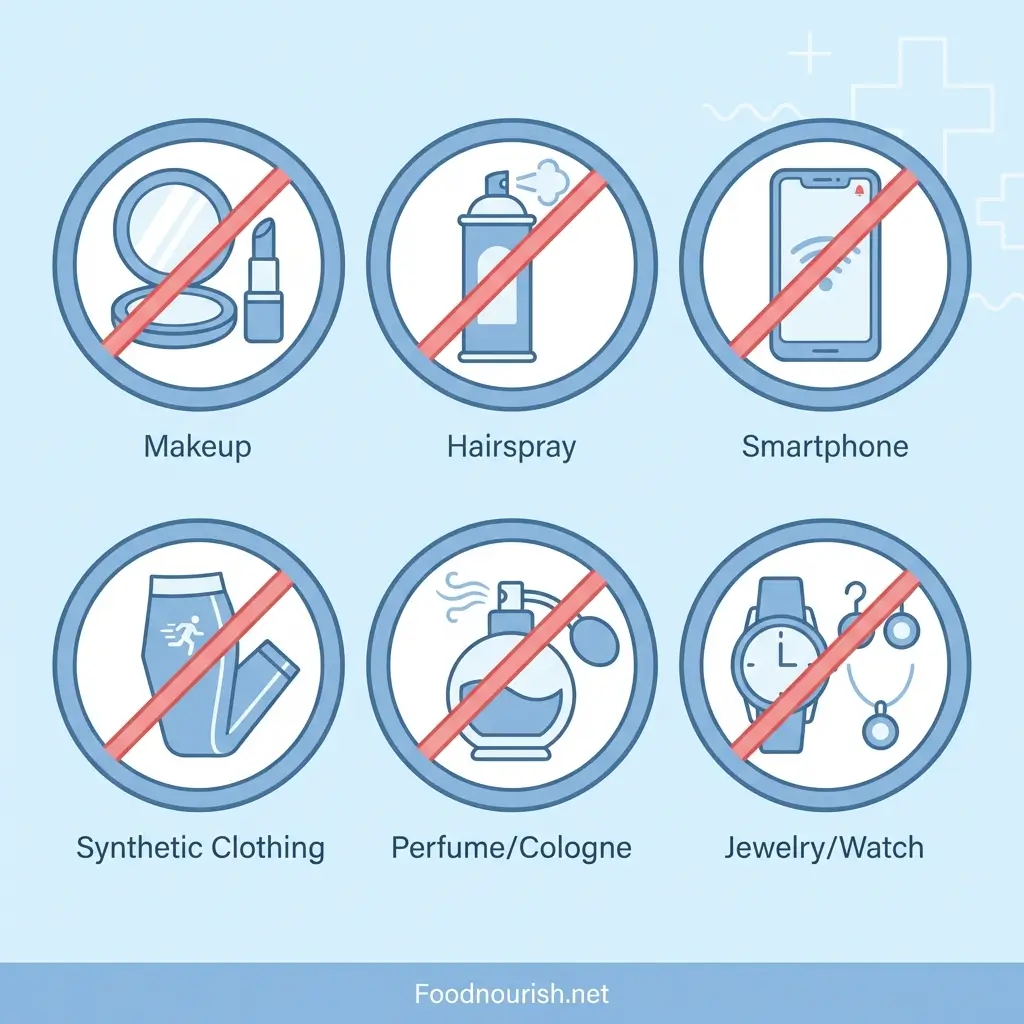
Chamber Construction Materials
Reputable manufacturers build chambers using materials tested for stability at clinical pressures. The ASME PVHO-1 standard (Pressure Vessels for Human Occupancy) governs construction requirements, mandating that all internal components, including paints, sealants, and adhesives, remain inert and non-reactive under operational conditions [1].
Patient-Introduced Items (The Primary Risk)
Most off-gassing incidents trace back to items patients bring into the chamber. This explains why every legitimate HBOT facility maintains strict “Prohibited Items” lists.
- Cosmetics and Lotions contain petroleum distillates that vaporize under pressure.
- Products marketed as “natural” or “organic” often contain plant oils that behave similarly under high-oxygen conditions.
- Synthetic Fabrics like nylon and polyester present dual risks. They can off-gas chemical vapors AND generate static electricity through friction. A single static spark in an oxygen-rich environment can cause catastrophic ignition.
- Electronics contain lithium batteries and circuit boards that behave unpredictably under pressure. Overheating or compression can trigger thermal runaway, releasing both heat and toxic fumes.
The Fire Triangle in HBOT
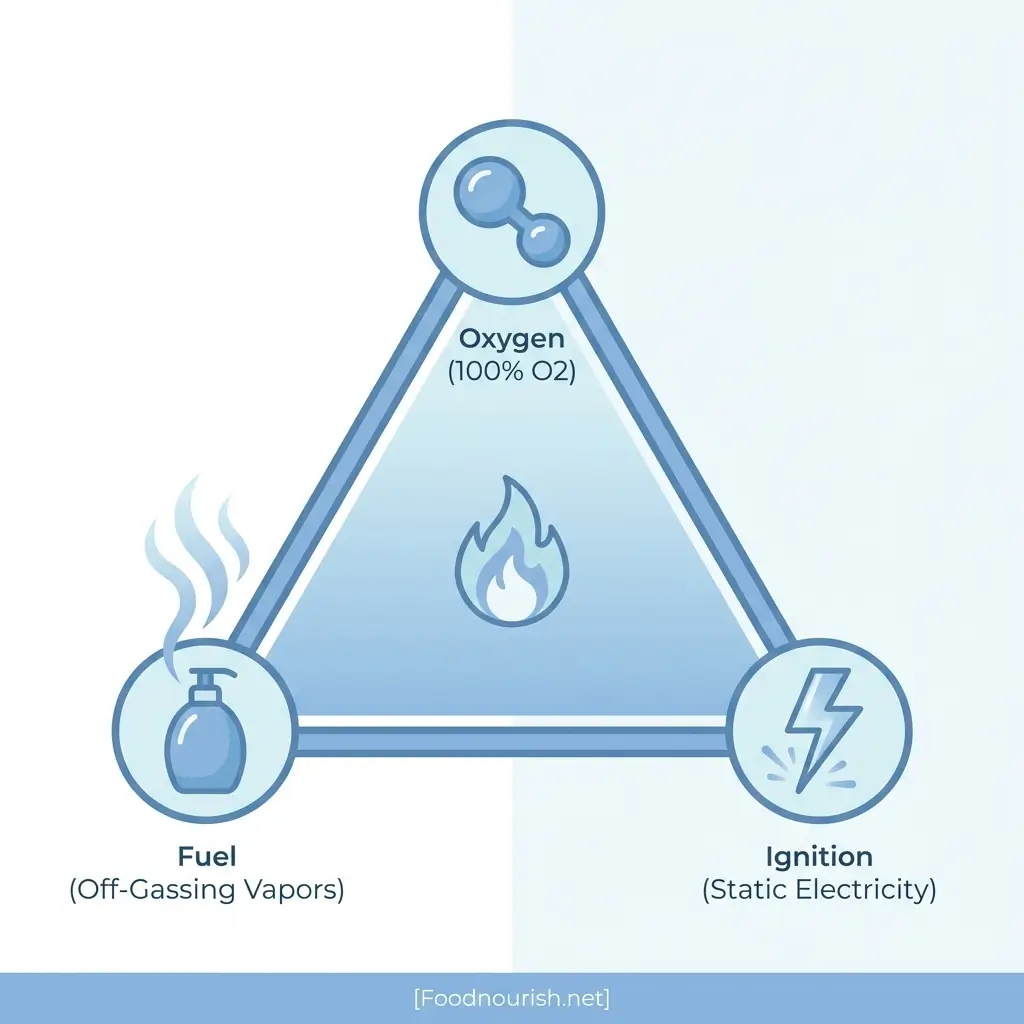
Fire requires three elements working together: oxygen, fuel, and an ignition source.
HBOT chambers already supply one element in abundance. Off-gassing materials provide the second. Static discharge from synthetic clothing provides the third.
“But I’ve worn this lotion a hundred times without any problems.”
Your lotion behaved differently because you weren’t sitting in a pressurized tube filled with pure oxygen. The chamber environment creates conditions that simply don’t exist in normal life.
Off-gassing isn’t primarily about unpleasant smells. The real concern is creating a fuel-rich atmosphere where fire can propagate rapidly and with devastating consequences.
How Clinics Prevent Harmful Off-Gassing
NFPA 99 Chapter 14
The National Fire Protection Association (NFPA) publishes NFPA 99, the Health Care Facilities Code. Chapter 14 specifically addresses hyperbaric facilities and represents the regulatory standard for chamber safety in the United States [2].
NFPA 99 mandates specific ventilation rates to flush any accumulated VOCs from the chamber atmosphere. It specifies material requirements, electrical grounding protocols, and emergency procedures. Accredited facilities undergo regular inspections to verify compliance.
Material Compatibility Testing
Before any material enters a clinical hyperbaric chamber, manufacturers subject it to oxygen compatibility testing. This involves exposing samples to operational pressures (2.0 to 3.0 ATA) in 100% oxygen environments and monitoring for any chemical release, degradation, or combustion tendency.
Seat cushions, acrylic viewports, internal paint, and even the thread used in mattress covers all require testing certification. The goal is zero off-gassing at any pressure the chamber will encounter during normal operations.
The 100% Cotton Rule
Every HBOT facility requires patients to wear 100% cotton scrubs during treatment. This rule exists because cotton fibers don’t off-gas chemical vapors, don’t melt or drip when exposed to heat, and don’t generate static electricity through friction.
(Ed. note: This single requirement eliminates the three most common patient-introduced risks simultaneously.)
You’ll be asked to remove all street clothes, jewelry, and makeup before entering the chamber.
The facility provides clean cotton scrubs specifically for your session. This isn’t excessive caution. It’s evidence-based risk management.
Identifying Zero Off-Gassing Chambers
If you’re considering purchasing a hyperbaric chamber for home use, material quality should drive your decision.
The difference between a safe chamber and a problematic one often comes down to manufacturing standards and material selection.
Hard vs. Soft Chambers: The Material Difference
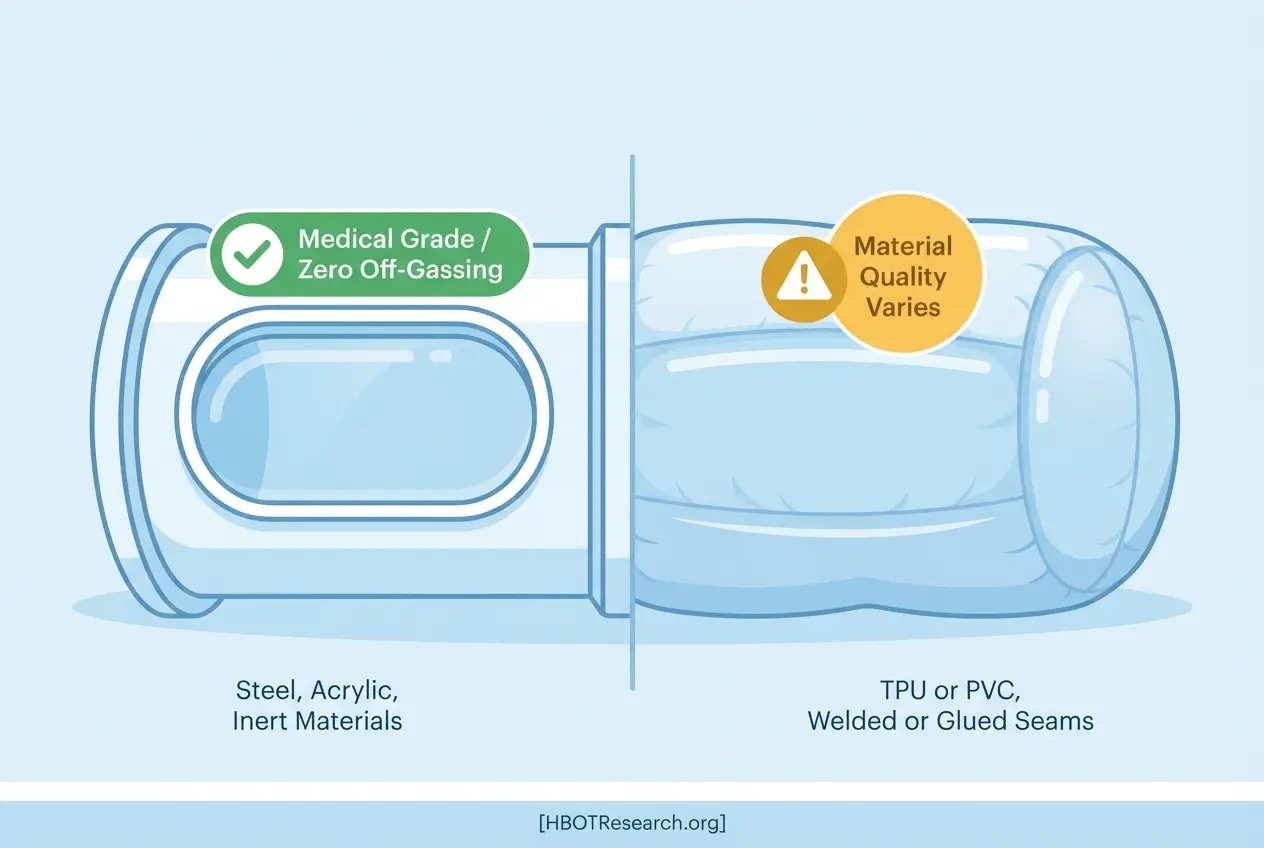
Medical-Grade Hard Chambers
Hard chambers use acrylic viewports and steel or aluminum pressure vessels. These materials are chemically inert and produce zero off-gassing at any clinically relevant pressure.
Top-tier manufacturers include Sechrist Industries, Perry Baromedical, ETC (Environmental Tectonics Corporation), and Haux Life-Support. These companies build hospital-grade equipment that meets ASME PVHO-1 standards and FDA clearance requirements [3].
Hard chambers cost significantly more than soft alternatives, often ranging from $75,000 to $250,000 or higher. The premium reflects both material quality and engineering precision.
Mild Hyperbaric Soft Chambers
Soft chambers use flexible polymer materials to create an inflatable pressure vessel. They operate at lower pressures (typically 1.3 to 1.5 ATA) and deliver ambient air or oxygen-enriched air rather than 100% oxygen.
This category produces the most consumer complaints about chemical smells and off-gassing concerns. Material quality varies dramatically between manufacturers.
The “New Car Smell” Warning
A strong plastic odor when you open a soft chamber indicates the presence of VOCs. Some buyers describe this as a “new car smell” or “chemical plastic smell.” Unlike a new car, you cannot simply air out a hyperbaric chamber and assume the problem resolves.
The smell typically originates from cheap PVC (Polyvinyl Chloride) bladder material or solvent-based adhesives used to seal seams.
These materials continue off-gassing for months or years, releasing vapors during every pressurization cycle.
PVC vs. TPU: What to Look For
Medical-grade Thermoplastic Polyurethane (TPU) and medical silicone represent safer alternatives to standard PVC. These materials undergo more rigorous manufacturing processes and produce significantly less off-gassing.
When evaluating soft chambers, ask specifically about bladder material composition.
Reputable sellers provide this information readily. Evasive answers should raise concerns.
Manufacturing Techniques That Matter
Zero off-gassing chambers use dielectric heat welding or radio frequency (RF) welding to seal seams. This process fuses material layers together using heat energy rather than chemical adhesives.
Chambers assembled with solvent-based glues continue releasing VOCs indefinitely. The adhesive never fully cures, and each pressurization cycle accelerates vapor release.
You cannot eliminate this problem through ventilation or “airing out” the chamber.
Red Flags When Evaluating Chambers
Several warning signs indicate a chamber may present off-gassing risks.
- No FDA 510(k) Clearance. FDA clearance requires material safety documentation. Chambers sold without clearance have likely skipped this testing.
- Extremely Low Price Points. Soft chambers priced significantly below market averages (under $4,000 to $5,000) typically use non-medical-grade industrial plastics. The savings come directly from material quality compromises.
- Missing Material Safety Data Sheets. Legitimate manufacturers provide MSDS documentation for bladder materials upon request. Sellers who cannot or will not provide these documents may not know what their chambers contain.
- Country of Origin Concerns. Some overseas manufacturers use materials banned in medical devices in their domestic markets. Ask about material sourcing and manufacturing location.
Off-Gassing Your Body Through Detoxification
Now that you understand how to keep your chamber environment safe, let’s examine the beneficial off-gassing that occurs inside your body during HBOT.
The Mechanism of Cellular Detox
Your cells require energy to eliminate waste products.
The molecular currency of cellular energy is ATP (adenosine triphosphate), produced primarily in your mitochondria. ATP production requires oxygen.
Under normal conditions, oxygen travels to tissues via hemoglobin in red blood cells. HBOT changes this equation dramatically.
At 2.0 ATA breathing 100% oxygen, your blood plasma carries approximately 10 times more dissolved oxygen than at sea level [4].
This oxygen-saturated plasma reaches tissues that red blood cells cannot access easily, including areas with compromised circulation, inflammation, or scarring.
Your mitochondria receive a massive oxygen surplus. ATP production increases. Cells suddenly have the energy reserves they need to pump out accumulated waste products.
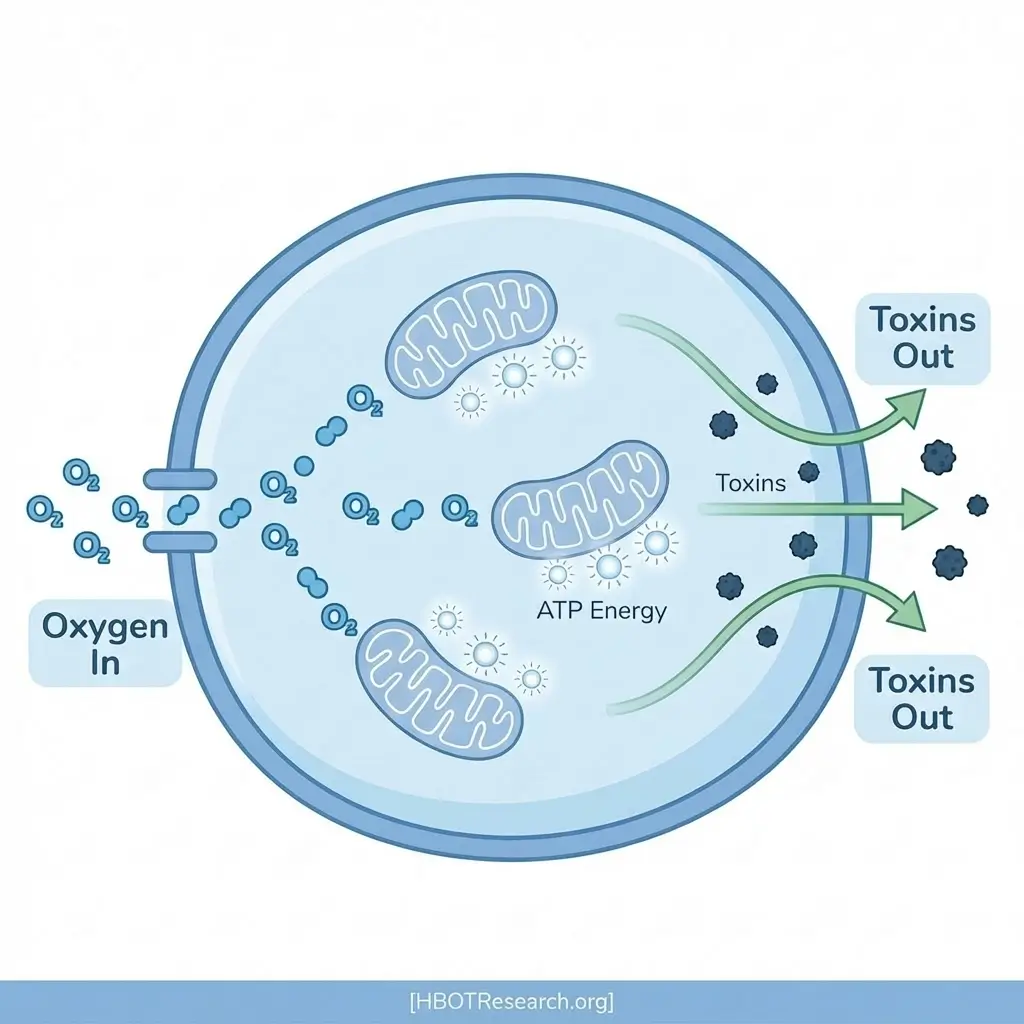
Mobilizing Stored Toxins
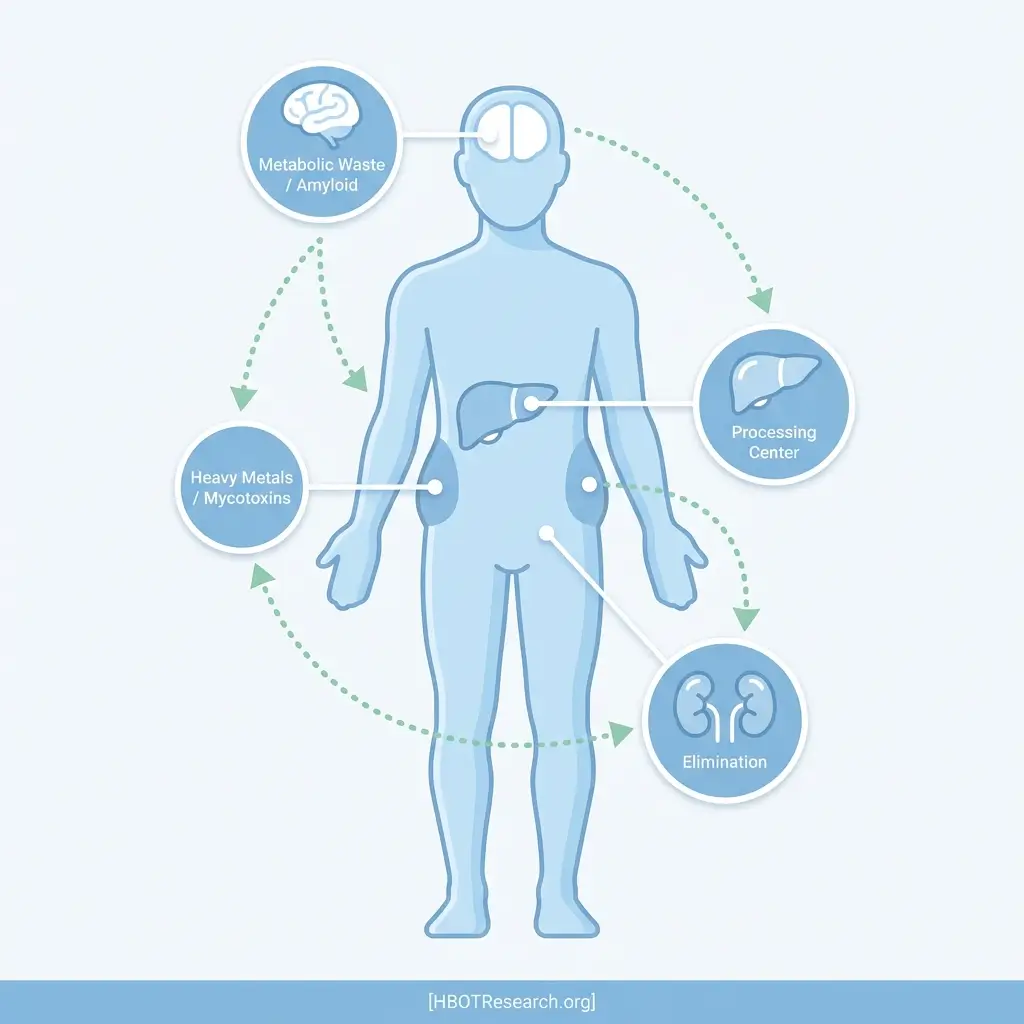
Your body stores lipophilic (fat-soluble) toxins in adipose tissue and connective tissue. Heavy metals like lead and mercury accumulate in bones and organs. Mold mycotoxins embed in fatty tissues. Metabolic waste products collect in lymphatic fluid.
These toxins remain sequestered because your body lacks the energy or circulation to mobilize them effectively. HBOT changes both variables simultaneously.
Improved oxygen delivery to peripheral tissues activates metabolic processes that have been running at reduced capacity. Stored toxins begin moving into circulation for processing and elimination.
The Herxheimer Reaction
“I started HBOT and felt terrible for a few days. Is this normal?”
Some patients experience what practitioners call a “Herxheimer reaction” or “detox flu” during early HBOT sessions. Symptoms may include fatigue, headache, muscle aches, brain fog, and general malaise.
This reaction occurs when toxin mobilization temporarily exceeds elimination capacity.
Your body releases stored compounds faster than your liver and kidneys can process them. The resulting symptoms reflect circulating toxins affecting multiple systems.
The reaction typically peaks within the first 5 to 10 sessions and resolves as elimination pathways strengthen. Adequate hydration, rest, and sometimes reduced treatment frequency help manage symptoms.
Organs Supported by HBOT
Liver and Kidneys
Your liver and kidneys filter circulating toxins from blood. Both organs require substantial oxygen to function optimally. HBOT delivers oxygen surplus directly to these filter organs, supporting their capacity to process the mobilized toxic load.
Brain and Glymphatic System
Research published in recent years has identified the glymphatic system as the brain’s waste clearance mechanism. This system operates primarily during sleep, flushing metabolic waste including amyloid-beta proteins associated with neurodegenerative conditions [5].
Preliminary studies suggest HBOT may support glymphatic function by improving cerebrospinal fluid oxygen content and reducing neuroinflammation.
Research in this area continues developing, but early findings show promise for brain health applications.
Comparative Summary: Chamber Risk vs. Body Benefit
| Aspect | Chamber Off-Gassing (Risk) | Body Off-Gassing (Benefit) |
|---|---|---|
| Source | Plastics, cosmetics, synthetics, adhesives | Fat cells, connective tissue, organs |
| Result | Toxic fumes, fire hazard, respiratory irritation | Toxin elimination, reduced inflammation, improved cellular function |
| Prevention/Optimization | Medical-grade materials, NFPA 99 compliance, cotton-only clothing | Adequate hydration, consistent session frequency, supporting elimination pathways |
Patient Safety Checklist
Before Your Session
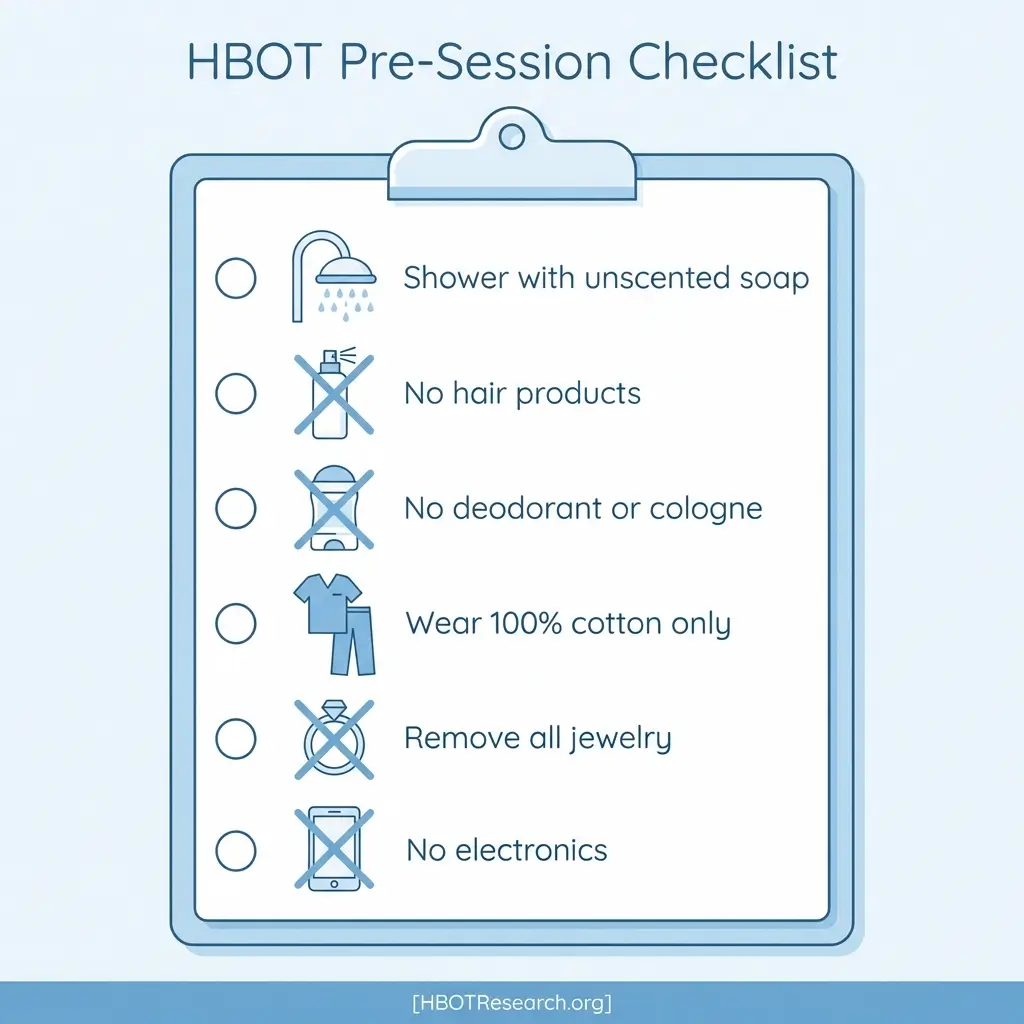
- Shower with unscented soap to remove all product residue from your skin and hair. Shampoo thoroughly and skip conditioner, which often contains silicones that persist on hair.
- Apply no hair products whatsoever. Hairspray, gel, mousse, and leave-in treatments often contain alcohol or petroleum derivatives that vaporize under pressure.
- Skip deodorant and cologne. Even “natural” deodorants may contain oils that behave unpredictably in high-oxygen environments.
- Wear only the 100% cotton scrubs provided by your facility. Remove all jewelry, including wedding rings, watches, and piercings.
During Your Session
- Report any unusual smells immediately. A chemical, plastic, or burning odor indicates something is off-gassing inside the chamber. Technicians can safely depressurize and investigate.
- Communicate any physical discomfort. Ear pain during pressurization, unexpected warmth, or breathing difficulty all warrant immediate attention.
Frequently Asked Questions
Making Your Decision
Off-gassing represents both a hazard and a healing mechanism in HBOT, depending entirely on context.
Material off-gassing inside the chamber creates fire and toxicity risks that require strict compliance with safety protocols. Biological off-gassing from your tissues represents a therapeutic benefit that many patients actively seek.
When selecting a chamber for home use or choosing a treatment facility, prioritize safety certifications.
Look for FDA 510(k) clearance, ASME PVHO-1 compliance, and NFPA 99 adherence.
Ask about material composition and manufacturing methods. Trust your nose; persistent chemical smells indicate problems.
When preparing for treatment, follow all clothing and product restrictions without exception. These rules exist because decades of hyperbaric medicine have identified exactly which patient behaviors create risk.
The only off-gassing you want happening during your HBOT session is the kind where your body releases stored toxins and begins healing at the cellular level. Proper equipment selection and safety compliance ensure that’s exactly what occurs.
References
- [1] American Society of Mechanical Engineers – “ASME PVHO-1: Safety Standard for Pressure Vessels for Human Occupancy” – 2024
- [2] National Fire Protection Association – “NFPA 99: Health Care Facilities Code, Chapter 14: Hyperbaric Facilities” – 2024 Edition
- [3] U.S. Food and Drug Administration – “Hyperbaric Chamber Device Classification” – 21 CFR 868.5470
- [4] Undersea and Hyperbaric Medical Society – “Hyperbaric Oxygen Therapy Indications” – 14th Edition, 2024
- [5] Hadanny, A., et al. – “Hyperbaric oxygen therapy improves neurocognitive functions and symptoms of post-COVID condition” – Scientific Reports, 2022 – https://doi.org/10.1038/s41598-022-15565-0