QUICK ANSWER
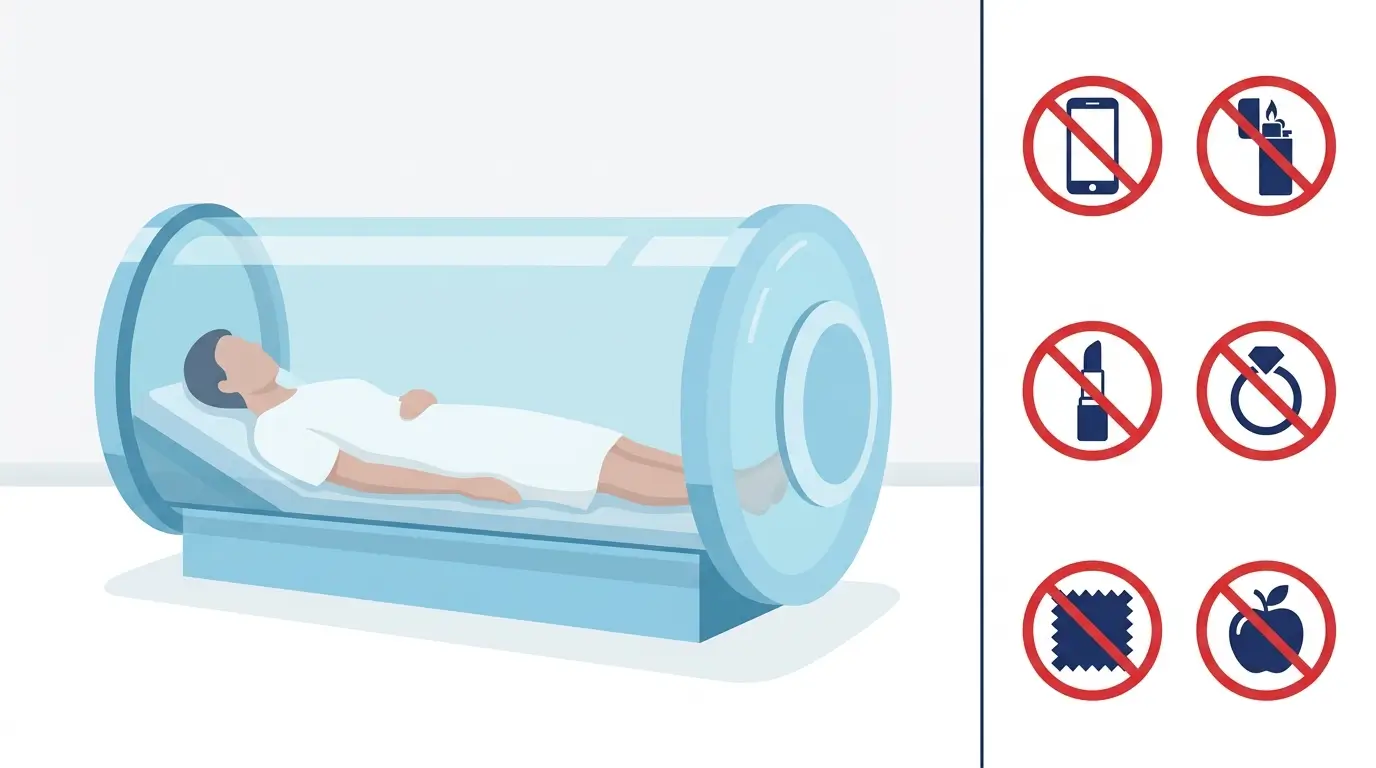
You cannot bring electronics, flammable materials, synthetic clothing, personal care products, metal objects, food, or drinks into a HBOT chamber. The oxygen-enriched environment inside the chamber makes ordinary items dangerous because materials burn faster and ignite more easily under pressure. Every hyperbaric facility maintains a prohibited items list based on NFPA 99 (National Fire Protection Association) and UHMS (Undersea and Hyperbaric Medical Society) safety standards. This guide covers the full list of things you can’t take with you in a HBOT chamber, with the science behind each restriction.
Why Prohibited Items in a HBOT Chamber Are a Serious Safety Issue
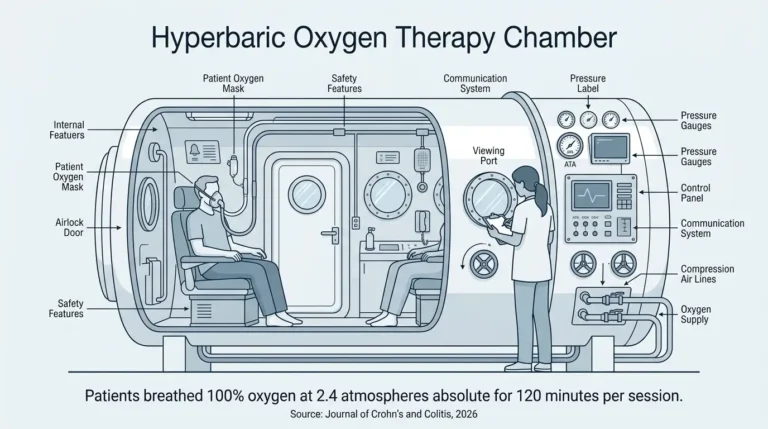
A hyperbaric oxygen therapy chamber pressurizes pure oxygen (or oxygen-enriched air) to between 1.5 and 3.0 atmospheres absolute (ATA) – 1.5 to 3 times stronger than normal sea-level pressure.
At these levels, your body absorbs significantly more oxygen, which accelerates healing. But that same concentrated oxygen creates a dangerous environment for everyday items.
Fire needs three things to start. It needs:
- fuel
- an ignition source, and
- oxygen.
Inside a HBOT chamber, the oxygen component is already maximized. That means the other two legs of the fire triangle require far less to cause ignition.
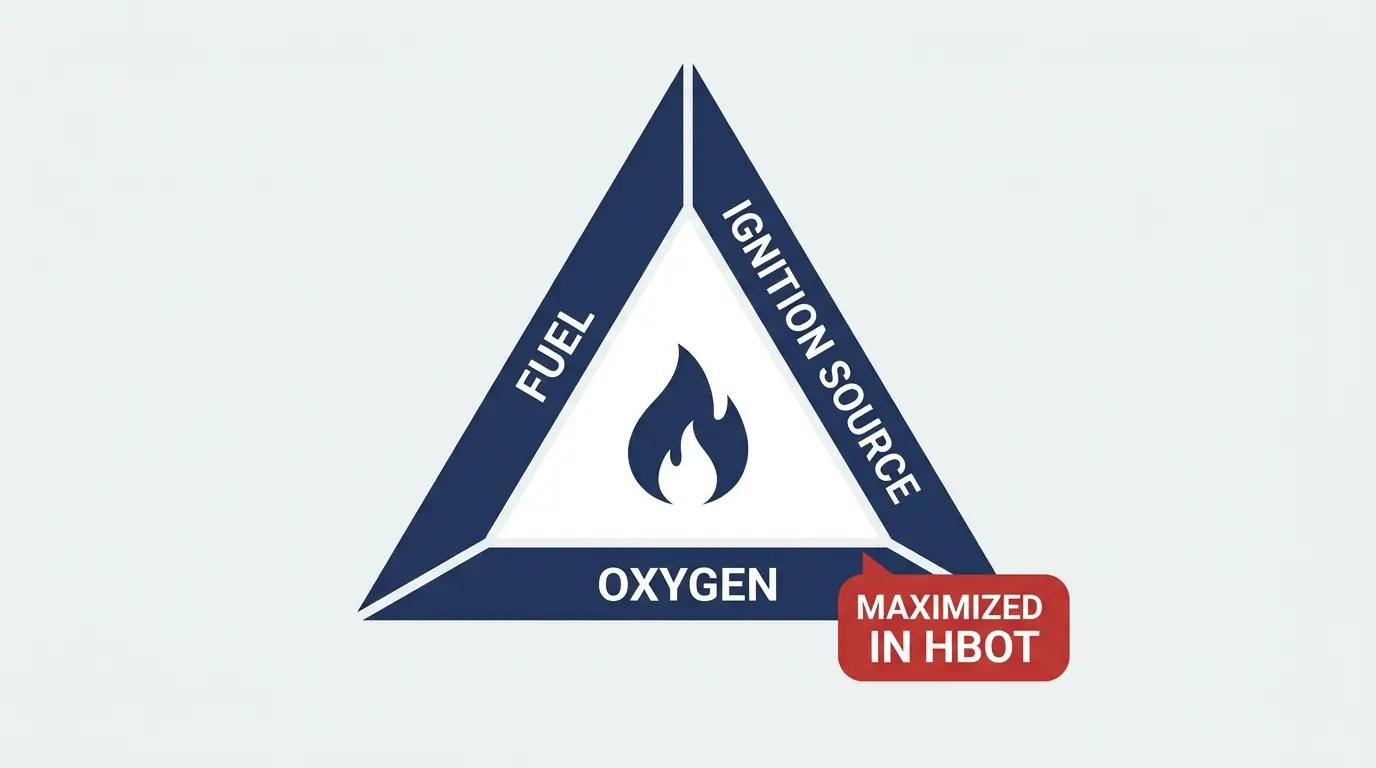
A material that would smolder slowly in normal air can combust in seconds inside an oxygen-enriched chamber.
This risk is documented. Between 1923 and 1996, 77 people died in 35 hyperbaric chamber fires worldwide [1].
The Undersea and Hyperbaric Medical Society (UHMS) estimates that 7 additional people have died since 2009 from fire, suffocation, or other adverse events in HBOT chambers [2].
On August 25, 2025, the FDA issued a safety communication to healthcare providers after receiving reports of fires with HBOT devices that resulted in serious injuries and deaths [3].
The root cause of those specific events remained unknown at the time of the communication.
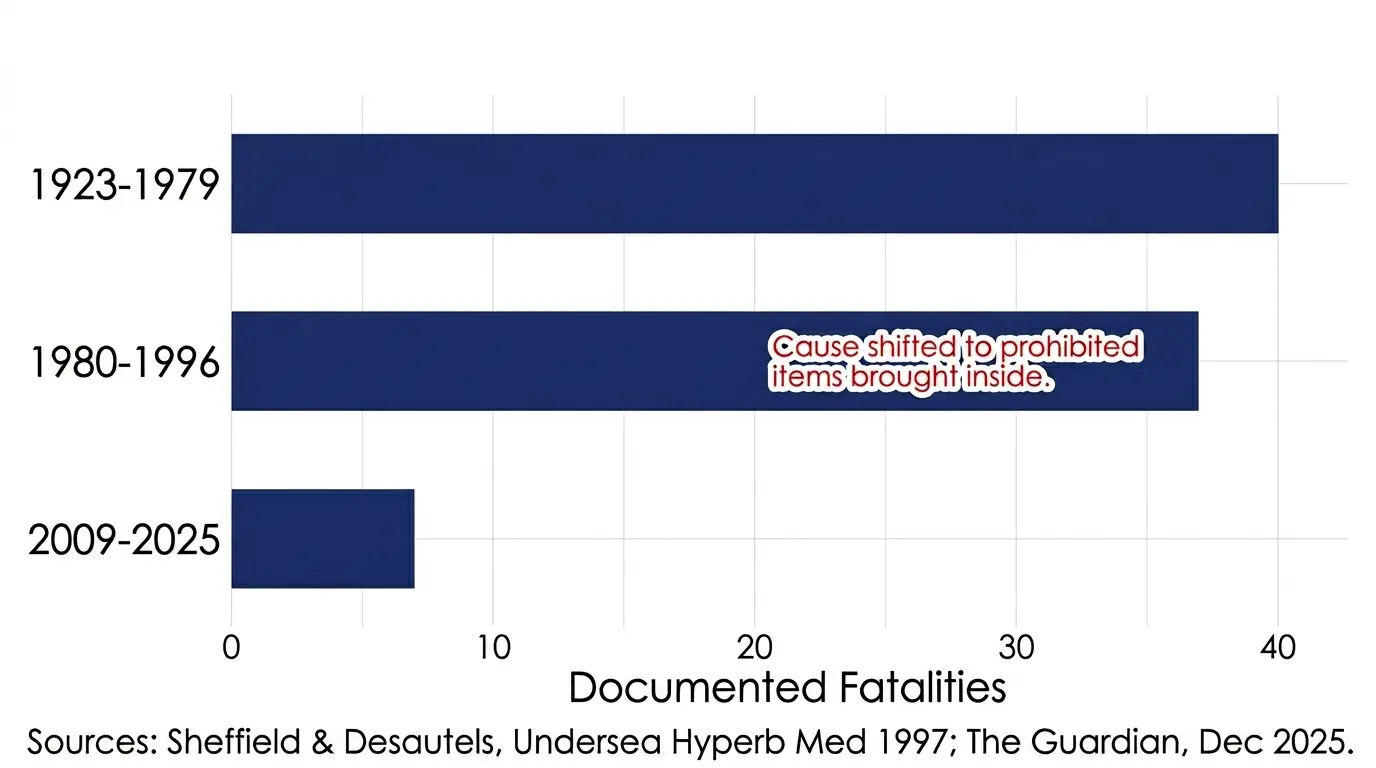
These numbers are small relative to the millions of HBOT sessions performed each year. HBOT is safe when facilities follow protocols.
Every prohibited item rule exists because someone identified a real scenario where that item could contribute to ignition, mechanical failure, or physiological harm inside the chamber.
RELATED: Arizona Therapist Dies in Hyperbaric Chamber Fire
Things You Can’t Take With You in a HBOT Chamber
Full Prohibited Items Summary
| Category | Prohibited Items | Why It Matters |
|---|---|---|
| Electronics | Phones, tablets, laptops, smartwatches, fitness trackers, hearing aids, e-cigarettes, portable chargers | Lithium-ion batteries can undergo thermal runaway and ignite in oxygen-enriched environments |
| Flammable Materials | Lighters, matches, cigarettes, e-cigarettes, hand warmers, chemical heating pads | Provide both fuel and ignition in a single object; highest-risk category |
| Clothing / Fabrics | Nylon, polyester, silk, wool, Lycra, spandex, synthetic wigs and extensions | Generate static electricity, which can spark and ignite in oxygen-rich air |
| Personal Care | Deodorant, perfume, hairspray, makeup, lotion, sunscreen, petroleum jelly, lip balm | Petroleum, alcohol, and oil bases release flammable vapors under pressure |
| Metal / Jewelry | Rings, necklaces, earrings, watches, coins, keys, metal zippers and snaps | Metal conducts static electricity and can produce sparks |
| Food / Drinks | All food, beverages, chewing gum, hard candy | Choking risk during pressure changes; organic material in oxygen environment |
| Contact Lenses | Hard contact lenses always; soft lenses vary by facility | Gas bubbles can form between lens and cornea under pressure changes |
1. Electronics and Battery-Powered Devices
Your smartphone, tablet, laptop, smartwatch, fitness tracker, e-reader, portable charger, and e-cigarette are all banned from the HBOT chamber.
Lithium-ion batteries power most of these devices. These batteries can experience thermal runaway, a self-sustaining chemical reaction where internal temperature rises uncontrollably and generates flammable gases [4].
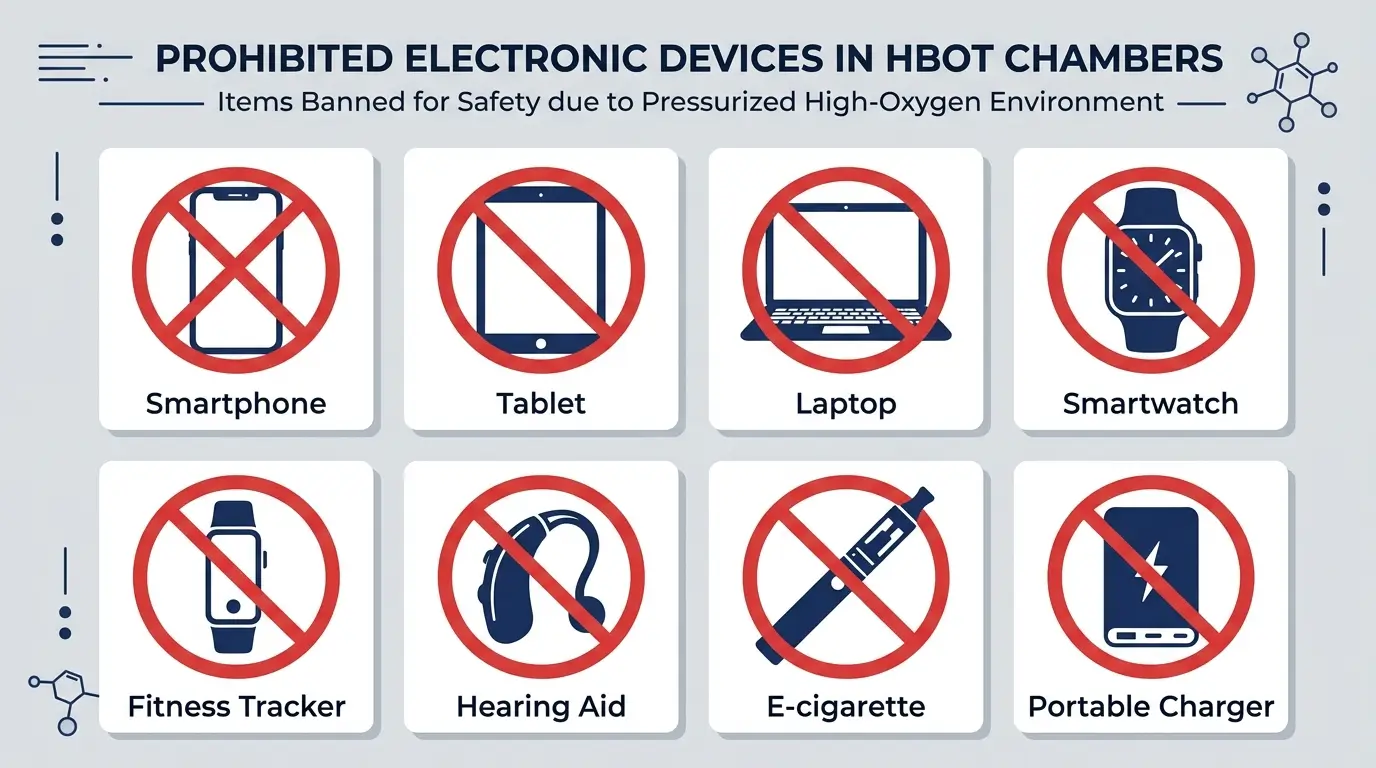
Thermal runaway can happen due to physical damage, overheating, or manufacturing defects. In normal air, a battery fire is dangerous. Inside an oxygen-enriched chamber, it can be catastrophic.
The UHMS and NFPA 99 classify all electronic devices as prohibited in monoplace chambers (single-person chambers pressurized with 100% oxygen) [5].
Some multiplace facilities, which pressurize with air rather than pure oxygen, may allow limited electronics in vestibule areas. But no facility permits electronics in the oxygen-breathing zone.
“What am I supposed to do for 90 minutes without my phone?” – Many patients ask this.
Most facilities have a TV visible through the chamber’s acrylic shell, and some provide intercom systems so you can speak with technicians. Plan to rest, nap, or simply sit still. The session goes faster than you expect.
WHAT ABOUT HEARING AIDS AND COCHLEAR IMPLANTS?
Standard hearing aids contain batteries and must come out before treatment. Cochlear implants are different. The internal component is surgically sealed inside your body and is generally acceptable. However, you must remove the external sound processor, which contains a battery.
The UHMS Safety Committee has addressed cochlear implants and finds no reason to withhold HBOT from patients with internal implant components [5].
2. Flammable Materials and Ignition Sources
Lighters, matches, cigarettes, e-cigarettes, hand warmers, and chemical heating pads represent the highest-risk category of prohibited items. They provide both fuel and a potential ignition source in a single object.
A single match struck inside an oxygen-enriched environment can produce a flame that spreads far faster and burns far hotter than it would in normal air. E-cigarettes combine a lithium-ion battery with a heating element and flammable liquid, making them one of the most dangerous items a patient could carry into a chamber.
Chemical hand warmers generate heat through an exothermic reaction (a chemical process that produces heat). Even sealed and unused, the heat they produce creates an unnecessary risk under pressurized oxygen conditions. Leave all warming devices in your car or locker before check-in.
4. Clothing and Fabrics
You cannot wear nylon, polyester, silk, wool, Lycra, or spandex inside a HBOT chamber. These synthetic fabrics generate static electricity when they rub against skin or other surfaces. In a normal room, a static spark is harmless. In an oxygen-enriched environment, a static spark is a potential ignition source [6].
Cotton does not retain oxygen in its fibers the way synthetic materials do, and it does not promote static buildup [7]. That is why every HBOT facility requires 100% cotton clothing. Most facilities provide cotton gowns or scrubs. Some allow you to wear your own clothing if it is verified as 100% cotton with no metallic fasteners.
This rule extends to everything on your body. Wigs, hair extensions, and toupees made from synthetic fibers are prohibited. Bras with underwire or synthetic fabric must be removed. Socks must be 100% cotton or left off entirely. Dartmouth-Hitchcock Medical Center requires patients to wear only the cotton hospital gown they provide, with no underwear or socks [8].
(Note: If you are unsure whether a garment qualifies, ask your technician. They would rather check your clothing tag than risk a problem inside the chamber.)
5. Personal Care Products
Deodorant, perfume, cologne, hairspray, hair gel, hair oil, makeup, lipstick, lip balm, lotions, creams, sunscreen, and petroleum jelly are all prohibited.
The reason is straightforward. Many personal care products contain petroleum, alcohol, or oil bases. These substances release flammable vapors, and that vapor release accelerates under the increased pressure inside the chamber [3].
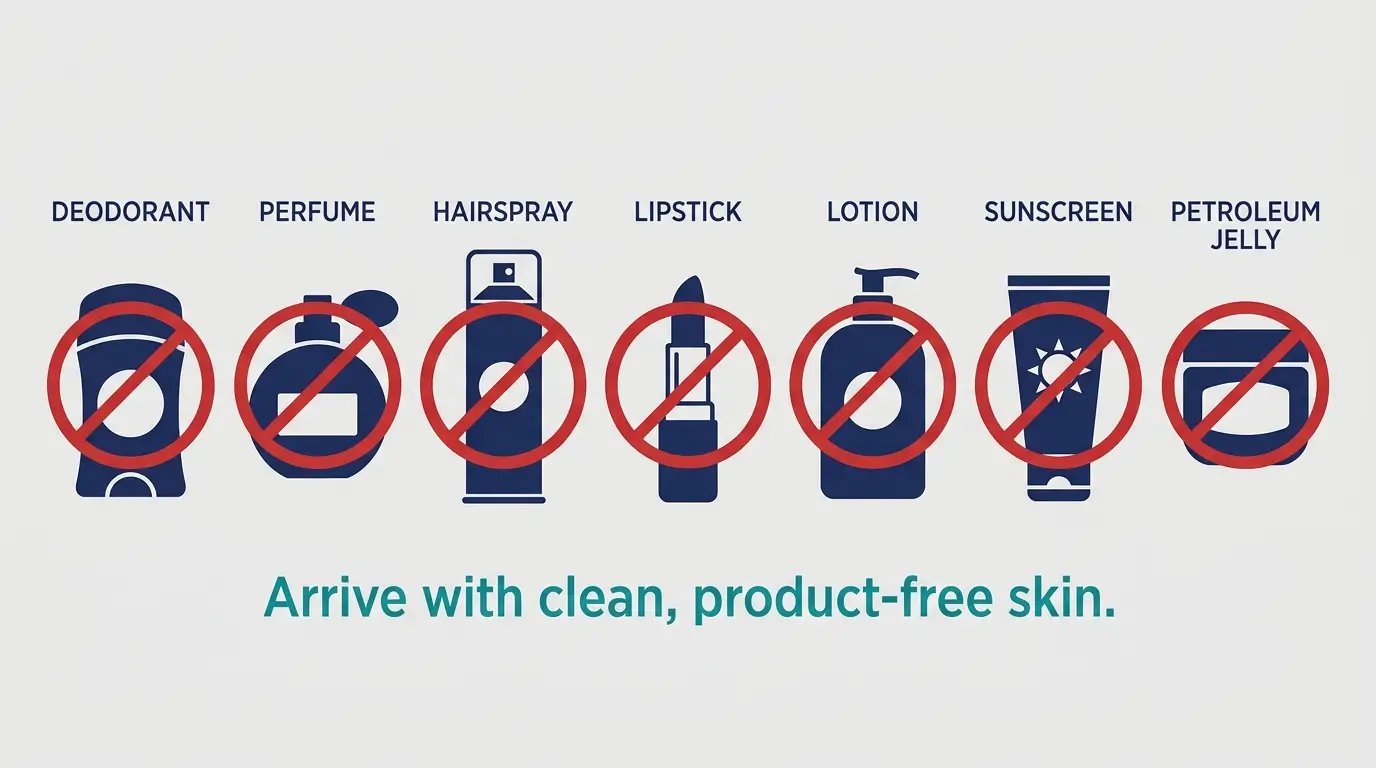
A product that seems stable on your skin in normal conditions can off-gas (release invisible fumes) in ways that create fuel for a fire.
Dartmouth-Hitchcock requires patients to avoid applying lotions, creams, oils, and deodorant for a full 12 hours before treatment [8].
Nail polish must be at least 12 hours old. Freshly applied nail polish still releases volatile organic compounds (VOCs) that present a risk.
(VOCs = chemical fumes that can ignite under pressure).
Your practical game plan before each session is simple. Shower without scented products. Skip deodorant. Skip all makeup. Do not apply any lotion, cream, or moisturizer. Arrive with clean, bare skin and dry, product-free hair. You can apply all your normal products after the session ends.
“Why 12 hours? What if I applied lotion last night?” Most facilities set the 12-hour window because that gives the volatile components enough time to fully off-gas from your skin. If you applied a light, water-based moisturizer the previous evening, you are likely fine. If you applied petroleum jelly or an oil-based product, mention it to your technician before entering the chamber.
Stop applying all lotions, creams, oils, and deodorant at least 12 hours before your HBOT session. Nail polish must also be at least 12 hours old.
6. Metal Objects and Jewelry
Remove rings, necklaces, bracelets, earrings, watches, coins, keys, belt buckles, hairpins, and any clothing with metal zippers, snaps, or buttons before entering the chamber.
Metal conducts electricity. In an oxygen-enriched environment, a metal object that accumulates static charge could produce a spark sufficient to ignite nearby materials [6].
Some metals also heat up unpredictably under pressure and concentrated oxygen.
Internal metal is a different situation. Joint replacements, surgical pins, plates, and screws are sealed inside your body tissue and do not pose a fire risk inside the chamber [9].
You do not need to worry about existing orthopedic hardware.
Store your jewelry, keys, and wallet in the locker or secure area your facility provides. Do not bring valuables to your appointment if you can avoid it.
7. Food, Drinks, and Gum
All food, beverages, chewing gum, and hard candy are prohibited inside the chamber.
Food particles can introduce organic material into the oxygen-enriched environment. Chewing gum and candy create a choking risk during pressure changes, when your body is focused on equalizing ear pressure. Some drink containers could also collapse or deform under the chamber’s pressure changes.
Most facilities provide water in an approved container during or after your session. If you have specific hydration needs, ask your technician about their water policy before treatment begins. Eat a light meal 1-2 hours before your session so you are comfortable without being full.
8. Contact Lenses and Eyeglasses
Hard contact lenses are prohibited in all HBOT facilities. Gas bubbles can form between a rigid lens and your cornea under pressure changes, causing discomfort, blurred vision, or corneal damage.
Soft contact lenses carry less risk, but many facilities still discourage them. Pressure changes can cause the lenses to suction onto your eyes or become uncomfortable during treatment.
Eyeglasses present a more nuanced situation. Some facilities allow glasses if staff can confirm they contain no titanium components [8].
Others ban all eyeglasses. If you need corrective lenses to see the TV during treatment, ask your facility about their glasses policy during your intake appointment.
9. Medical Devices, Implants, and Wound Dressings
This category requires a conversation with your HBOT team before your first session.
Insulin pumps must be disconnected and removed. They contain batteries and electronic components that are incompatible with the chamber environment. If you use an insulin pump, work with your endocrinologist and HBOT team to plan glucose management around your treatment schedule.
Continuous glucose monitors (CGMs) are evaluated on a case-by-case basis. The UHMS has reviewed passive RFID-based monitoring devices (RFID = sensors that transmit data only when scanned, without an active battery) and found no reason to prohibit passive RFID tags or chips in monoplace chambers [5].
However, any CGM with an active transmitter requires a facility-specific risk assessment.
Pacemakers and cardiac implants are generally compatible with HBOT. The UHMS Safety Committee has confirmed that Watchman cardiac implants do not require withholding hyperbaric treatment [5].
Pacemaker leads and housings are sealed and designed to withstand pressure variations. Still, report all implanted devices to your treatment team so they can document them in your chart.
Wound dressings present a unique challenge. If you are receiving HBOT for wound healing, you may arrive with dressings that contain petroleum-based ointments, silver compounds, or other active ingredients.
Your facility’s hyperbaric safety coordinator evaluates each dressing using the NFPA 99 risk assessment flow chart before allowing it into the chamber [10].
In some cases, a damp cotton towel is placed over the dressing as an additional safety measure. In other cases, the dressing is replaced with a hyperbaric-compatible alternative before treatment.
Do not assume your existing wound dressing is approved. Bring a list of all dressings and topical medications you use so your team can assess each one.
10. Medications and Substances
Some medications and substances do not go inside the chamber with you, but they affect your treatment if you use them beforehand.
- Nicotine constricts blood vessels. HBOT works by increasing oxygen delivery through your bloodstream. Using nicotine before treatment directly counteracts this mechanism, reducing the therapy’s effectiveness [11]. Many HBOT providers require patients to avoid all tobacco and nicotine products during their course of treatment.
- Caffeine also causes vasoconstriction and may reduce HBOT effectiveness if consumed shortly before a session [11].
- Alcohol impairs your body’s response to elevated oxygen levels and should not be consumed before treatment.
- Certain medications interact with the high-oxygen environment inside the chamber. Doxycycline, tetracycline, and some other antibiotics can react negatively with elevated partial pressures of oxygen (the higher concentration of oxygen you breathe inside the chamber) [11].
- Some chemotherapy agents may also be affected. Photosensitizing medications, which increase your sensitivity to light, can cause discomfort inside the bright chamber.
Share your full medication list with your HBOT team before your first session. They will flag any medications that require timing adjustments or monitoring during treatment.
Differences Between Monoplace and Multiplace Chambers
The type of chamber you use affects how strict your prohibited items list will be.
- A monoplace chamber holds one patient. The entire chamber fills with 100% oxygen. Every surface, every fiber on your body, every item inside the chamber sits in pure oxygen. Fire risk is at its highest. Restrictions are at their strictest. Most monoplace facilities allow NOTHING inside the chamber except the patient in a cotton gown and facility-provided cotton linens [8].
- A multiplace chamber holds multiple patients. The room pressurizes with compressed air, and patients breathe oxygen through a mask or hood. The ambient air inside the chamber is not 100% oxygen, which lowers the overall fire risk. Some multiplace facilities allow cotton books or reading materials. However, the area around each patient’s mask still contains concentrated oxygen, so most item restrictions remain in effect.
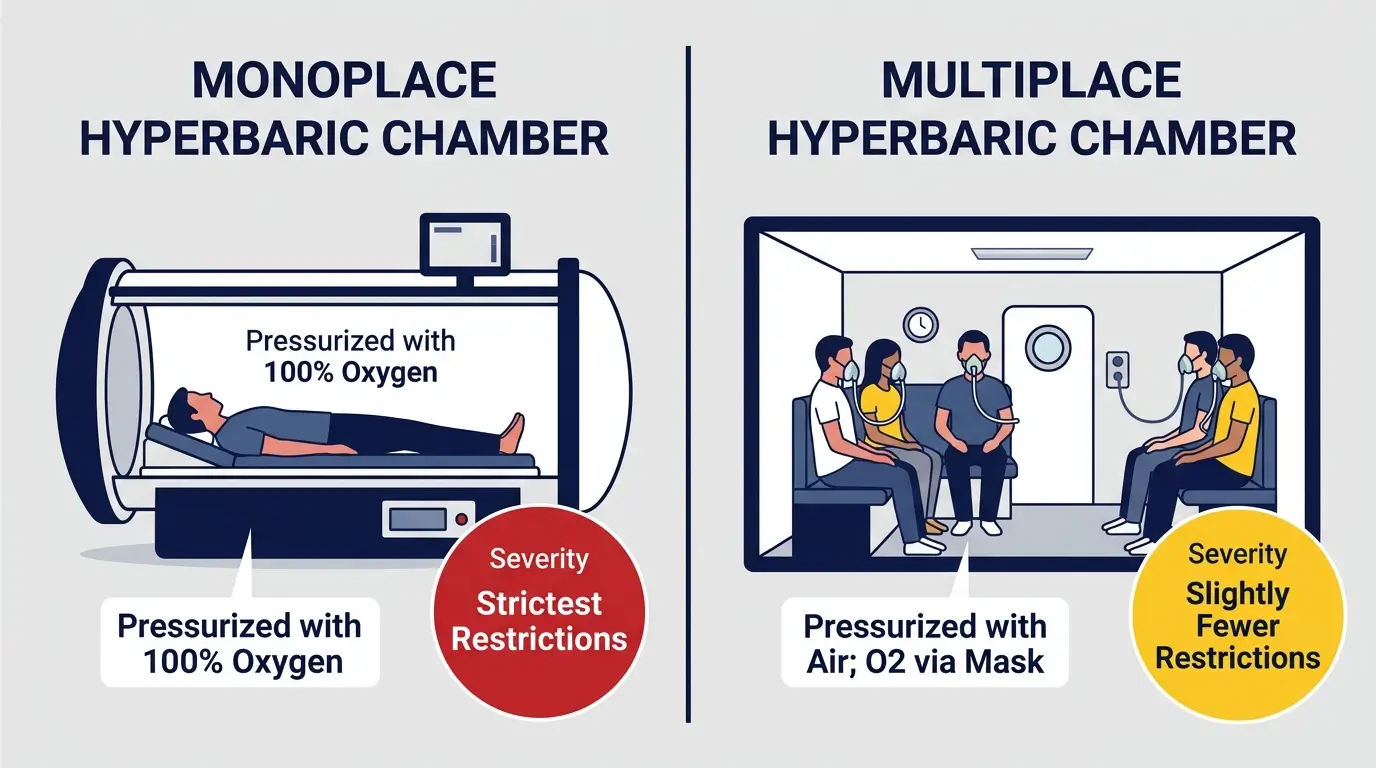
If you do not know which type of chamber your facility uses, ask during your intake call. Expect the strictest rules and you will always be prepared.
What You CAN Bring (or Will Be Provided)
Knowing what you cannot bring is only half the picture. Here is what most facilities provide or allow.
Your facility will typically supply 100% cotton gowns or scrubs, cotton linens and blankets, and an approved water container. Some facilities allow prescribed eyeglasses after inspection. A few multiplace facilities permit cotton-bound reading materials, though this varies.
You can bring items to store in your locker for after treatment. Pack your phone, your book, your skincare products, and a change of clothes in a bag. Leave the bag outside the chamber. Use the products after your session.
Pre-Session Checklist
Use this list before every appointment. Feel free to print it and use it before each session.
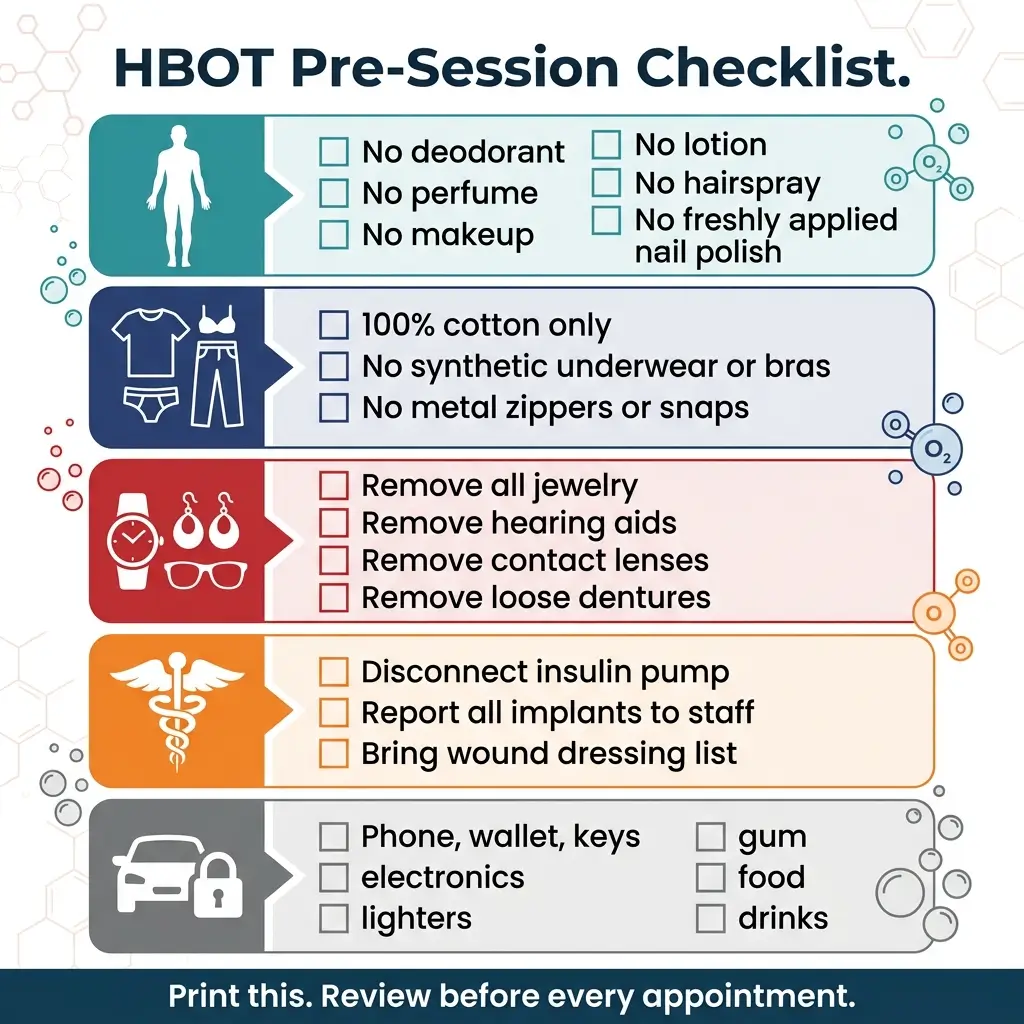
- Your body. Shower without scented soap if possible. No deodorant. No perfume or cologne. No makeup, lipstick, or lip balm. No lotion, cream, sunscreen, or oil. No hairspray, gel, or oil. Freshly applied nail polish (less than 12 hours old) is not allowed.
- Your clothing. Wear 100% cotton or plan to change into facility-provided gowns. No synthetic underwear, bras, or socks. No clothing with metal zippers, buttons, or snaps.
- Your accessories. Remove all jewelry, including rings, earrings, necklaces, and watches. Remove hearing aids. Remove contact lenses (hard lenses always; soft lenses per facility policy). Remove dentures or partial plates if loose-fitting.
- Your medical items. Disconnect insulin pumps. Inform staff of all CGMs, pacemakers, and implanted devices. Bring a list of wound dressings and topical medications for staff review.
- Leave in your car or locker. Phone, wallet, keys, electronics, lighters, gum, food, drinks, reading materials (unless approved), and any personal care products.
What Happens If a Prohibited Item Enters the Chamber
Technicians screen you before every session. At many facilities, this screening includes a visual check, a review of your intake form, and direct questions about products on your skin and items on your person.
If a prohibited item is discovered mid-treatment, the technician may pause the session and begin depressurization. This process takes time and disrupts your treatment schedule. Depending on the item, you may need to be evaluated before the session can resume or be rescheduled.
In a worst-case scenario, a prohibited item causes ignition inside the chamber. Fires in HBOT chambers, while rare, have resulted in fatalities [1][2].
Every screening step exists to prevent this outcome.
Do not hide items or assume a small item “probably won’t matter.” If you forgot to remove something, tell your technician immediately. They will handle it quickly and without judgment. That honesty could save your life.
Frequently Asked Questions
HOW WE RESEARCHED THIS
This article draws from a review of 15+ sources spanning clinical facility patient education materials, regulatory guidance, peer-reviewed research, and professional safety standards.
Primary sources include the UHMS MEDFAQs and Prohibited Item Risk Assessment documentation, the NFPA 99 Healthcare Facilities Code (Chapter 14, Hyperbaric Facilities), and the FDA’s August 25, 2025 Safety Communication on HBOT devices.
Fire incident data covers the period from 1923 through 2025, drawing from Sheffield and Desautels’ 73-year analysis published in Undersea and Hyperbaric Medicine and updated reporting from The Guardian (December 2025).
Medication interaction references come from StatPearls (NCBI). Patient education details were cross-referenced against published guidelines from Dartmouth-Hitchcock Medical Center, Hyperbaric Centers of Texas, O2 Oasis, and Ocala Wound Care.
This guide does not replace your facility’s specific prohibited items list. Every hyperbaric center maintains its own “Go/No-Go” list based on chamber type, operational protocols, and risk assessments. Always confirm restrictions with your treatment team before each session.
Citations
- [1] Sheffield PJ, Desautels DA. “Hyperbaric and Hypobaric Chamber Fires: A 73-Year Analysis.” Undersea and Hyperbaric Medicine. 1997;24(3):153-164.
- [2] The Guardian. “‘It’s absolute anarchy’: Oxygen therapy chambers have led to horrific deaths.” December 4, 2025.
- [3] U.S. Food and Drug Administration. “Follow Instructions for Safe Use of Hyperbaric Oxygen Therapy Devices.” August 25, 2025.
- [4] Fire Safety Research Institute. “Learn the Fire Hazards of Lithium-Ion Battery Thermal Runaway.” May 1, 2025.
- [5] Undersea and Hyperbaric Medical Society. “MEDFAQs: Safety/Technical, Item Approval.”
- [6] WHA International, Inc. “Electrostatic Discharge (ESD) Ignition Research Presentation.” Published via UHMS Safety Articles.
- [7] Burman F. “Selecting Suitable Chamber Clothing Materials.” Hyperbaric Medicine International.
- [8] Dartmouth-Hitchcock Medical Center. “Hyperbaric Medicine Patient Support and Education.”
- [9] Ocala Wound Care. “Do’s and Don’ts of Hyperbaric Oxygen Treatment.”
- [10] Burman F, Mize J. “Prohibited Item Risk Assessment.” UHMS. 2023.
- [11] National Center for Biotechnology Information (StatPearls). “Hyperbaric Oxygen Therapy Contraindications.” Updated May 27, 2025.